
Seasonal clothes do not need the same access as the garments you wear this week. Moving them into a separate, clearly labeled group can free the daily closet without making the next seasonal change difficult. The key is choosing a storage position and format before packing everything away.
Sort the seasonal group by how the clothing normally belongs in storage: hanging pieces, folded garments and bulky soft items. Follow each garment’s care guidance rather than assuming one bag is suitable for the whole collection.
Separate seasonal clothing from undecided clothing
Confirm that each item is genuinely waiting for another season. Clothes you are deciding whether to keep should have their own short-term review group rather than disappearing into long-term storage. That distinction keeps the seasonal collection easier to identify when it returns.
Prepare garments according to their care instructions and check the proposed storage environment. Avoid interpreting a zipper or cover as a guarantee of protection against every condition. The storage item’s material and closure are features, not replacements for appropriate clothing care.
Keep suitable garments hanging
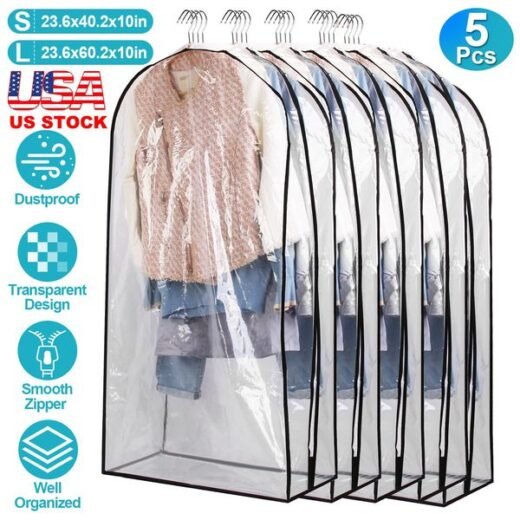
Clear Hanging Garment Bags are designed for clothing on hangers and come as a five-pack. Their transparent PEVA construction and zippered closures allow the stored garment to remain visible. Measure from hanger to hem and allow space for the bulk of jackets or other suitable pieces.
Give the seasonal hanging group its own rail section if possible. Leave enough space to move a bag aside and identify the garment. Hangers and pictured clothing are not included, so check the actual combination you plan to use.
Use soft bags for suitable folded groups
The 90L Zippered Clothes Storage Bags come as two beige bags with clear windows and two-way metal zippers. Each is listed at 23.6 by 15.7 by 13.8 inches. Compare the filled footprint with the intended shelf or other suitable storage location.
Group clothing by a useful destination or season, not simply by which item fits last. A window can help identify the contents, but similar folded groups may still need a short label. Place that identification where you can see it without moving other stored pieces.
Choose a framed clear box when its access fits
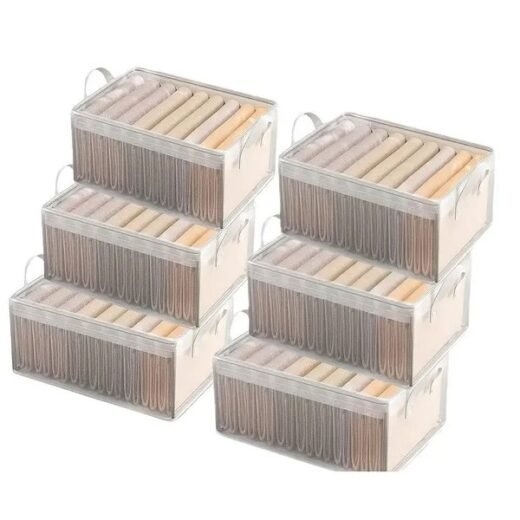
Clear Steel-Frame Closet Storage Boxes use transparent PVC around internal steel frames and close with zippers. Their six-piece set folds when empty. This is a different structure from an unframed soft bag, but the usable location still needs access to the closure.
Check loading and stacking instructions before arranging filled boxes. Do not create a tall stack merely because the frames keep their shape. Keep the group you will retrieve first in a position that can be removed without unpacking the whole storage area.
Use zipper compression selectively
The Zipper-Compression Bedding Storage Bag has a main closure and a separate compression zipper in a nylon fabric body. It is intended for suitable soft items, including seasonal clothing, and does not require a vacuum extractor for its zipper-based design.
Choose the size around the contents and close the zippers without forcing an overfilled bag. Do not infer a fixed percentage of space savings. Different items and folding methods create different packed shapes, and garment care requirements still apply.
Plan the return before closing the bags
Record a simple label such as season, garment group and destination. Keep a note of where each container will sit. When the season changes, retrieve one useful group at a time and return its daily-use pieces to their normal positions before storing the outgoing season.
For the hanging-versus-folded decision, use our garment storage comparison. If bedding shares the area, read spare bedding storage without vacuum bags. Compare Closet Organization after choosing the groups, care requirements and retrieval order.
About these guides: RoomSprig uses AI-assisted writing and supplier product information to explain storage choices. Check the selected version, measurements and installation details on the individual product page.