When shoes collect behind the front door, a bigger rack can make the entrance harder to use. The useful question is how many pairs genuinely need to live there. An everyday pair, a weather-dependent alternative and occasional shoes have different access needs. Moving the occasional group to another location can change the storage problem before you buy anything.
For a narrow entrance, compare three formats: pockets on a compatible door, individual boxes arranged in a small stack, and a rotating tower in an available corner. Each uses space differently. None makes the space occupied by the shoes disappear.
Start with a weekday shoe count
List the pairs each household member normally reaches for when leaving home. Keep the list specific: work shoes, walking shoes or shoes used for a regular activity. Include boots separately because their height and shape may rule out a pocket or low box. A household with several occasional pairs does not necessarily need all of them at the entrance.
Set those selected shoes beside the proposed storage location. Notice which pairs are easy to put away together and which need their own opening. This is more useful than counting organizer compartments and assuming every compartment will hold any shoe.
Check the entire door movement
A hanging organizer uses a surface that may otherwise be empty, but its contents project into the room. Measure the available door height, the hook position, and the distance to anything behind the door. Open the door fully and check the path it sweeps. Also check whether the loaded organizer would interfere with the latch or with another door nearby.
The 24-Pocket Over-Door Shoe Organizer has twenty-four pockets across eight tiers and metal hooks. Compare the pocket format with your actual footwear, then check door thickness, top clearance and closing clearance. Its vertical layout is a possible solution for suitable shoes, rather than a reason to force larger footwear into small openings.
Use boxes when front access matters
Individual boxes create a defined home for a pair and allow a more deliberate arrangement. They also occupy floor or shelf space, and the front doors need space to open. A stack tucked too tightly behind the entrance door can become inconvenient even if it technically fits.
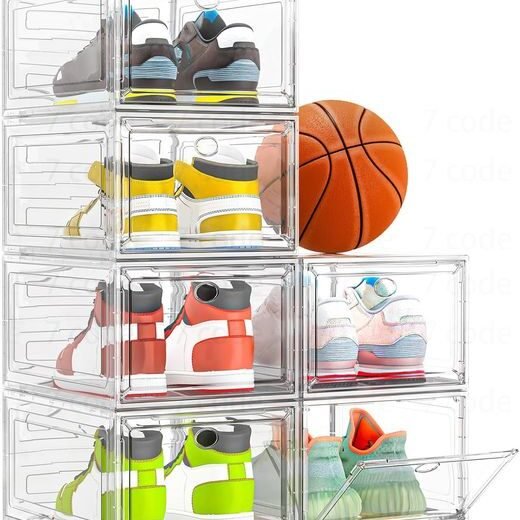
The Magnetic-Door Shoe Storage Boxes, Set of 6 provide clear magnetic front doors and a peg-lock stacking design. Check the interior fit for the widest or tallest pair you intend to store. Plan where a person will stand while opening the lowest and highest boxes. Follow the supplied stacking guidance rather than treating a narrow stack as a substitute for a suitable location.
Allow for a tower’s rotation
A rotating format can bring different sections toward you, which may suit a corner where a long rack cannot sit. However, a corner that accommodates a tower at rest may still prevent it from turning. Measure the usable surrounding space, including nearby coats, bags and the entrance door.
The 6-Tier Rotating Shoe Storage Tower has divided storage sections and a rotating base. Compare its openings with your footwear and allow room for both rotation and access. It remains freestanding floor storage; if the entrance truly has no available footprint, a compatible door or a location just outside the entrance may be the better direction.
Test the return habit before expanding
For one week, return only the selected daily pairs to the entrance and put occasional shoes elsewhere. Notice whether the problem is the storage format, the amount being stored or the effort required to put a pair away. Keep room for an empty hand to open a door or box rather than packing the group tightly.
Browse entryway storage by the space you can actually use. For a closer comparison of visibility and enclosure, read clear, fabric and covered shoe storage. If you also need somewhere to sit or hang a coat, comparing a shoe bench with a hall tree can help define that separate requirement.
About these guides: RoomSprig uses AI-assisted writing and supplier product information to explain storage choices. Check the selected version, measurements and installation details on the individual product page.