A laundry cabinet can fit perfectly against a wall and still be awkward to use. Its front may tilt into the walkway, a basket may need more lifting room than expected, or a nearby machine door may block the same space. Placement should account for the furniture’s moving parts and the task you will perform beside it.
Before ordering, sketch the proposed position and check the product’s current assembly and installation information. Treat the listed dimensions as the closed furniture outline, then add the space needed to open it and work.
Check the route into the room
Measure the intended location, doorways and any tight turns between the delivery entrance and the laundry area. Consider where you will unpack and assemble the piece. A narrow room may have enough space for a finished cabinet but very little room for laying out panels and hardware.
Do not assume that a piece arrives assembled or that every component can be carried separately. Check the supplier’s information for the specific item. Keep packaging details and assembly requirements separate from the furniture’s finished measurements.
Draw the opening area on the floor
The 31-Inch Tilt-Out Laundry Cabinet has a white engineered-wood body, an elevated base and a tilt-out laundry basket. Its listed overall dimensions are 15.5 inches wide, 12 inches deep and 31 inches high.
The narrow body can make it a candidate for a small area, but the front still needs room to open. Use removable floor markers to represent the closed outline, then stand in front as if you were handling laundry. Compare this with our tilt-out hamper clearance guide before committing to a corner.
Account for drawers and two hamper sections
The Double Tilt-Out Laundry Hamper Cabinet with Two Drawers combines two removable baskets, two tilt-out sections and two storage drawers in an MDF cabinet. More access points give you more ways to organize, but they also need clearance.
Check whether both hamper sections can be used without shifting another object. Then check drawer travel at its own height, where a machine handle or countertop edge might interfere. Avoid placing furniture so that opening one item prevents you from reaching the contents of another.
Leave a route for removing the bag
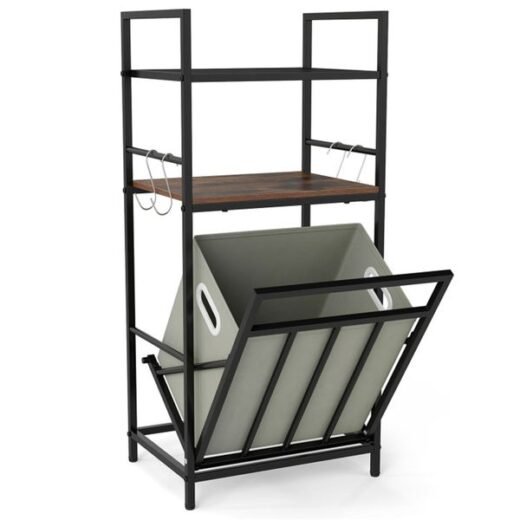
The Tilt-Out Laundry Hamper with Two Shelves and Hooks has a metal frame, an engineered-wood shelf, a metal-mesh shelf, a removable laundry bag and four S-hooks. Its open shelves offer a different layout from an enclosed cabinet.
Measure the action of lifting the bag as well as opening the hamper. Items hanging from side hooks should stay out of that route. Decide where a removed bag will go while you sort or transfer its contents, rather than assuming it can always sit in the walkway.
Plan a rolling station around its working position
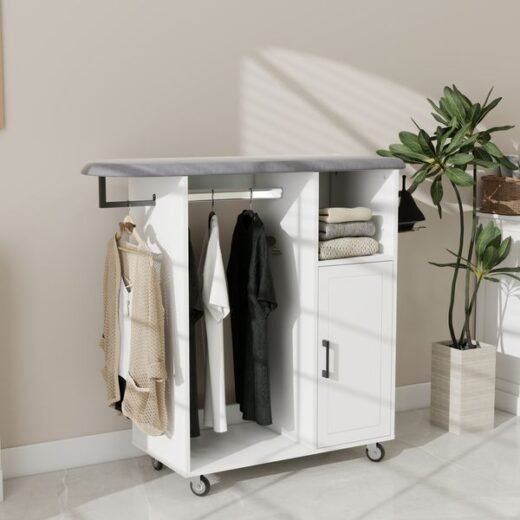
The Rolling Ironing Cabinet with Shelves and Hanging Rods combines an ironing surface, open shelves, enclosed adjustable-shelf storage, garment rods and an iron holder on a wheeled base. An iron is not included.
Check the position where you would use it, including working height, room around the ironing surface and access to hanging clothes. The presence of wheels does not tell you about locking features or make every surface an appropriate working location. Follow the station’s instructions and your iron’s requirements. Our ironing station planning guide covers the transition between use and storage.
Finish assembly before filling the furniture
Inventory the hardware and read the full instructions before tightening the first connection. Build in the recommended order, check that moving parts operate correctly, and follow any manufacturer-specified securing or anchoring requirements. Choose wall fasteners appropriate to the instructions and wall construction rather than assuming one supplied fixing suits every surface.
After positioning the furniture, test the machine doors, cabinet fronts and bag-removal route with the furniture empty. Browse laundry storage with those measurements beside you. A simpler piece that preserves the room’s working space may be more useful than a larger cabinet with openings you cannot comfortably access.
About these guides: RoomSprig uses AI-assisted writing and supplier product information to explain storage choices. Check the selected version, measurements and installation details on the individual product page.