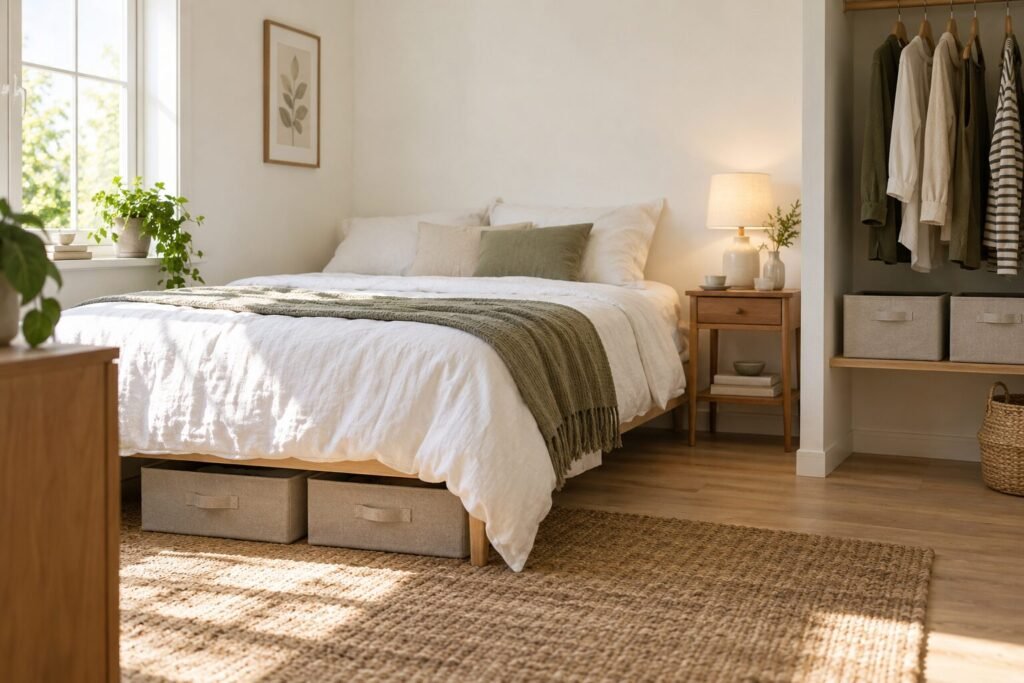
Keepsakes often collect on the dresser because it is an easy place to set down a souvenir, card or small object. Over time, the collection can cover the area needed for everyday dressing. The answer is not necessarily a larger display surface; it may be a clearer decision about what should be visible.
Separate the collection into objects you want to see often, objects you want to keep but do not need on display, and objects that require particular storage conditions. Do not treat every meaningful item as suitable for the same container.
Choose a display group with a reason
Select a few objects that work together, perhaps from one trip or one period of family life. This creates a display that can be understood without covering every available surface. Other keepsakes can remain grouped and identifiable elsewhere.
Keep items with specific conservation or care needs separate from this general organization plan. A decorative cabinet or fabric bin is not automatically appropriate for photographs, delicate textiles, valuable collections or materials that require controlled conditions. Follow the requirements of the objects rather than relying on the storage product’s appearance.
Measure depth before choosing a wall display
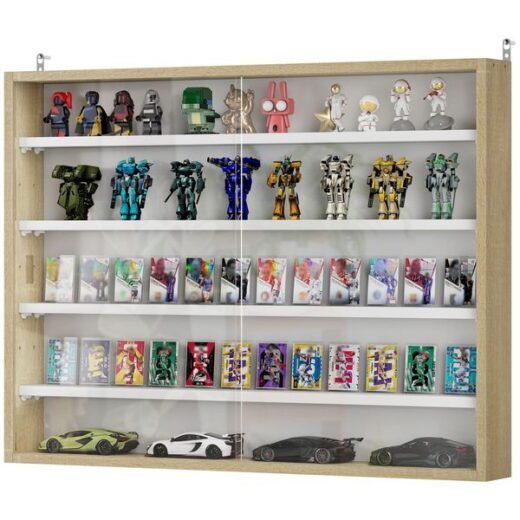
The Wall-Mounted Display Cabinet with Glass Doors has a particleboard frame, two glass doors and four adjustable shelves with seven placement positions. It is a shallow cabinet intended to move a small collection onto the wall.
Its listed interior depth is three inches, so compare the depth of each object before choosing it. A piece can be short enough for a shelf but too deep for the cabinet to close. Check width, height and shelf position as separate measurements. Glass doors provide a visible display format, not a guarantee of preservation or protection for every collectible.
Plan the cabinet’s installation and access
Choose a wall location that allows the doors to open and the items to be placed without awkward reaching. Check whether a lamp, mirror or other wall fitting conflicts with the proposed position.
Assembly and secure wall fixing are required. Use fixings suitable for the wall and follow the manufacturer’s installation and loading instructions. If you cannot confirm the wall support or installation method, resolve that before purchasing a wall-mounted piece. A display should not depend on improvised attachment.
Record which objects belong to each group, especially when several small souvenirs look similar. A short description can preserve their context without requiring everything to remain visible. Keep that record where it can be found with the stored group.
Use baskets for groups that do not need display
The Choixe Natural Willow Nesting Baskets, Set of 5 provides five graduated basket sizes that nest when empty. The open format can group suitable accessories or other everyday objects on shelves.
Compare the basket shape with the contents rather than using it for everything labeled as a keepsake. Small loose pieces may need their own appropriate container within a larger group. Follow the basket care guidance: use a dry or slightly damp cloth and avoid prolonged moisture. A woven decorative basket should not be described as archival storage.
Give a covered group a clear label
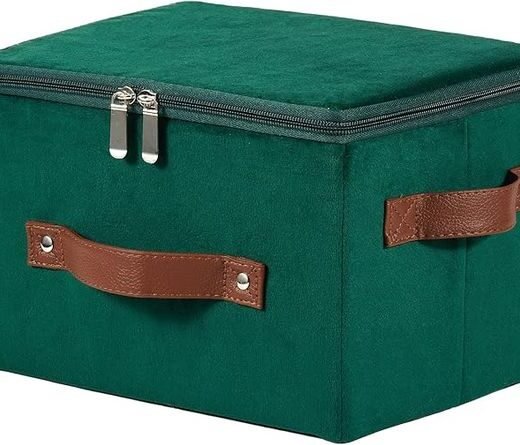
The Velvet Storage Bin with Zippered Lid and Handles has a velvet-fabric exterior, a zippered lid, PU handles and a foldable design. Its supplier-listed overall size is 10 by 8 by 7 inches.
It can provide a defined covered location for suitable small belongings. Leave room to open the lid and choose contents that allow the zipper to close easily. Keep a short list of the group inside, so the closed lid does not turn the bin into an unidentified collection of mixed objects.
Protect the dresser’s everyday function
Reserve a usable area for the items handled while getting dressed. If jewelry also occupies the dresser, see our jewelry storage comparison to give those pieces a dedicated format.
Revisit the display when it becomes hard to use the surface, rather than automatically adding another container. The basket and covered-bin guide helps compare shelf layouts. Browse bedroom storage once you have separated the visible collection from the belongings that need a labeled place elsewhere.
About these guides: RoomSprig uses AI-assisted writing and supplier product information to explain storage choices. Check the selected version, measurements and installation details on the individual product page.