Utensil storage usually becomes frustrating for one of three reasons: the drawer is too crowded, the tools are far from the task, or a countertop holder contains more than you can easily see. Choose a storage format by utensil shape and frequency of use. Long cooking tools, small measuring pieces and serving supplies do not all need to share one container.
Start with the working collection
Empty the current drawer or crock and separate everyday tools from occasional ones. Look for duplicates and tools that belong at a different station. For example, a serving spoon used at the table may not need prime space beside the stove, while measuring spoons belong near the place you bake.
Group by length as well as task. Short gadgets disappear at the bottom of a deep upright holder, and long utensils may not fit a shallow drawer. Measure the longest handle and the widest working end so the chosen container supports the shape rather than forcing an awkward arrangement.
Use drawer trays for small, distinct groups
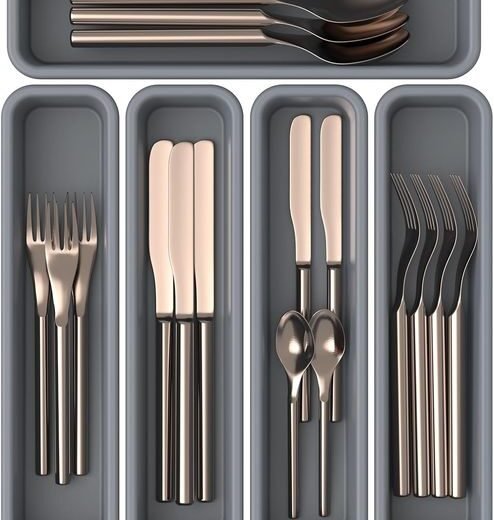
The silicone drawer organizer trays include five separate pieces that can be rearranged. Measure the usable drawer width, depth and height, including clearance beneath the frame. Arrange empty tray footprints first and check whether the drawer closes with the tallest tool inside.
Give each tray a job such as measuring tools or small opening tools. A tray filled with unrelated objects quickly becomes another miniature clutter drawer. Leave room to lift the actual tool with your fingers, and avoid a layout that lets a long handle span two trays and catch when the drawer moves.
Choose a divided caddy for a task station
The divided utensil caddy with towel holders has four compartments, towel holders, hooks and a side basket. Its listed assembled dimensions are 14.76 by 6.69 by 14.96 inches. Stored handles and hanging accessories can extend beyond that form, so include them in the placement check.
A divided layout can separate a station’s useful groups without sending every item to the same open crock. Keep the arrangement specific: utensils used for serving, for example, rather than unrelated tools gathered from all over the kitchen. Check that hanging items do not intrude into the preparation area or prevent nearby drawers from opening.
Compare one rotating crock with two fixed holders
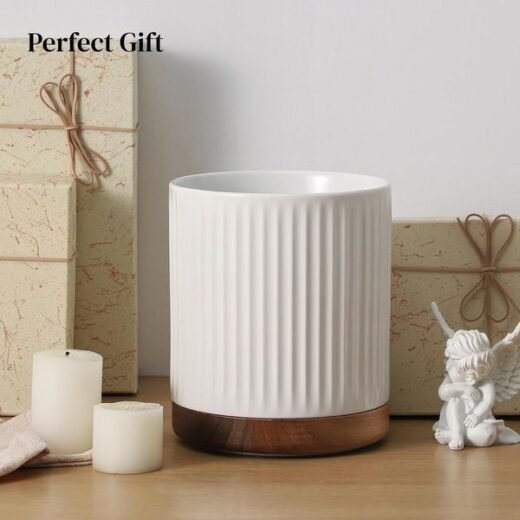
A rotating ceramic kitchen utensil holder lets you turn an upright group to reach different tools. Leave room around the base for rotation and above the tallest utensil for removal. Rotation will not solve a collection so dense that tools tangle together; reduce or split the group if needed.
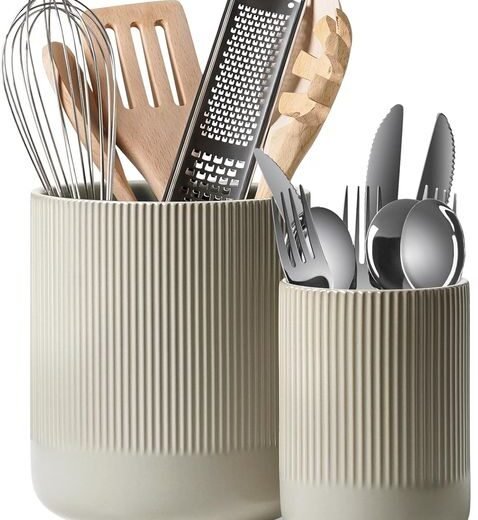
The fluted ceramic utensil holders come as two crocks of different heights. This can separate longer and shorter tools while keeping both groups upright. Measure each proposed location beneath wall cabinets. The shorter crock is useful only if the shorter tools still remain visible and easy to grasp.
Place storage where the task happens
Do a short rehearsal: retrieve the tools for one regular meal, use them and put them away. Notice whether you keep walking to another drawer or moving a holder out of the way. That observation tells you more than matching the crock to the backsplash.
Keep cleaning access in mind. A caddy may need to be lifted to wipe the counter, while trays may need to be removed to clean beneath them. Follow the supplied care guidance for each piece rather than treating all materials the same.
The appliance cord and small-tool guide helps if several appliances share the station. Compare kitchen storage with your actual tool groups and measurements.
Finish by assigning one clear home to each everyday tool. After a week, look for items repeatedly left outside their home. Move that group closer, make the compartment less crowded or reconsider the format. The arrangement succeeds when returning a tool is straightforward enough to happen without thought.
About these guides: RoomSprig uses AI-assisted writing and supplier product information to explain storage choices. Check the selected version, measurements and installation details on the individual product page.