A bread box is also a countertop layout decision. The door needs somewhere to open, the box needs a suitable resting surface, and the space around it should remain useful for the rest of the kitchen. A single-level box and a corner-shaped box use that area differently. Compare the shape of your counter and the items you intend to organize before choosing between them.
Establish what belongs in the box
List the packaged bread and other items you actually want to keep together. Follow their storage instructions and dates. A bread box gives the group a defined home, but its presence does not establish how long a particular food will remain suitable or replace package guidance.
Measure the largest package without folding or compressing it unnaturally. If you regularly keep two different loaves, measure them side by side as you would store them. Include the space needed to remove one without unloading the whole box. A tidy photograph of one loaf does not establish a useful household capacity.
Check the counter’s clear shape
Measure the usable width and depth of a straight counter area. In a corner, measure both adjoining sides and note any backsplash projections, outlets or trim. Check overhead clearance if a cabinet sits above the proposed box. Then draw the door-opening area on the counter.
Keep the preparation surface and appliance access in the plan. A box may fit neatly under a cabinet while its door opens into the space needed to set down a mixing bowl. Consider those simultaneous tasks rather than measuring the counter while it is completely empty.
Single-level storage favors one open compartment
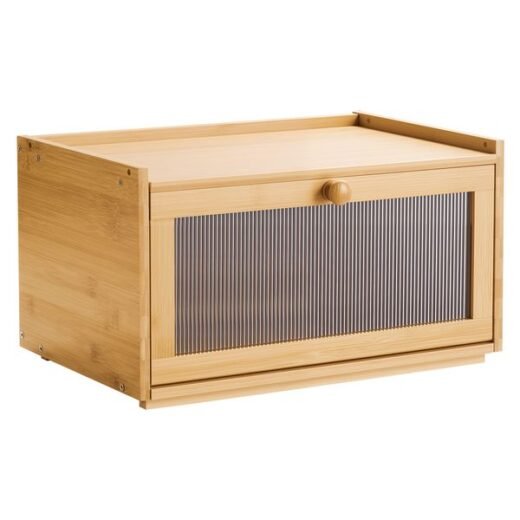
The bamboo bread box with a textured acrylic door has a single, undivided compartment, a magnetic closure and ventilation openings in the back. Its flat top is part of the listed design, but follow the instructions before placing items on it. Do not assume the top supports an appliance or a particular load.
Leave clearance in front for the door and check the assembled footprint against your counter. The compartment can suit a group that is easiest to retrieve from one level. Put the frequently used item near the opening, and keep the interior simple enough that you can see whether something has been left at the back.
Corner storage adds another retrieval level
The two-level bamboo corner bread box has a corner-shaped body, adjustable interior dividers, acrylic door panels and rear ventilation openings. It can organize two levels of items, but each level still needs access. Measure both counter sides and the room required to open the doors.
Adjust the dividers for the actual package group, following the supplied instructions. Check whether a tall package fits comfortably and whether retrieving the lower group means reaching behind another item. A second level is useful when it separates two clear groups; it can become inconvenient if the household keeps one large package that needs an uninterrupted compartment.
Use a separate shelf if the problem is surrounding clutter
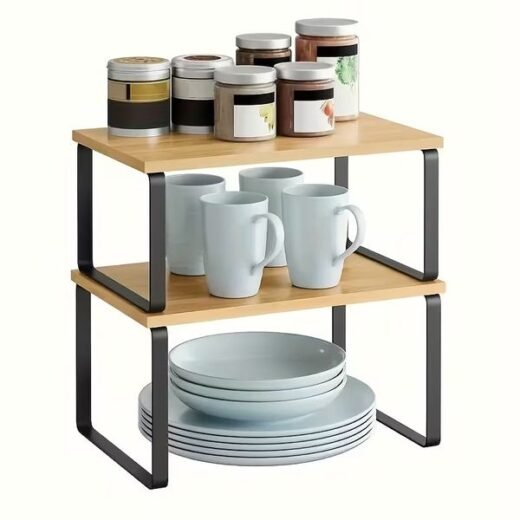
A box cannot solve every object gathered around the breakfast area. Stackable countertop shelves can arrange other everyday kitchen items on two adjustable wood shelves. Use them outside the bread box only if they help keep the related group accessible without filling the remaining worktop.
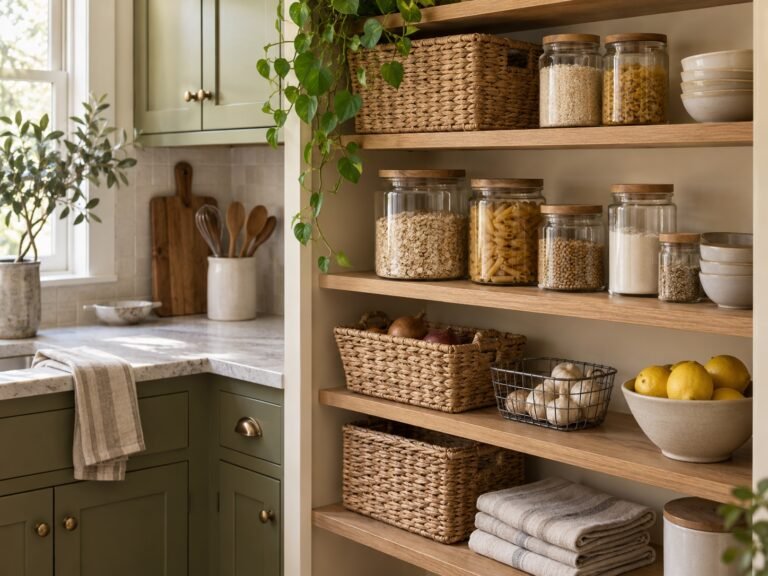
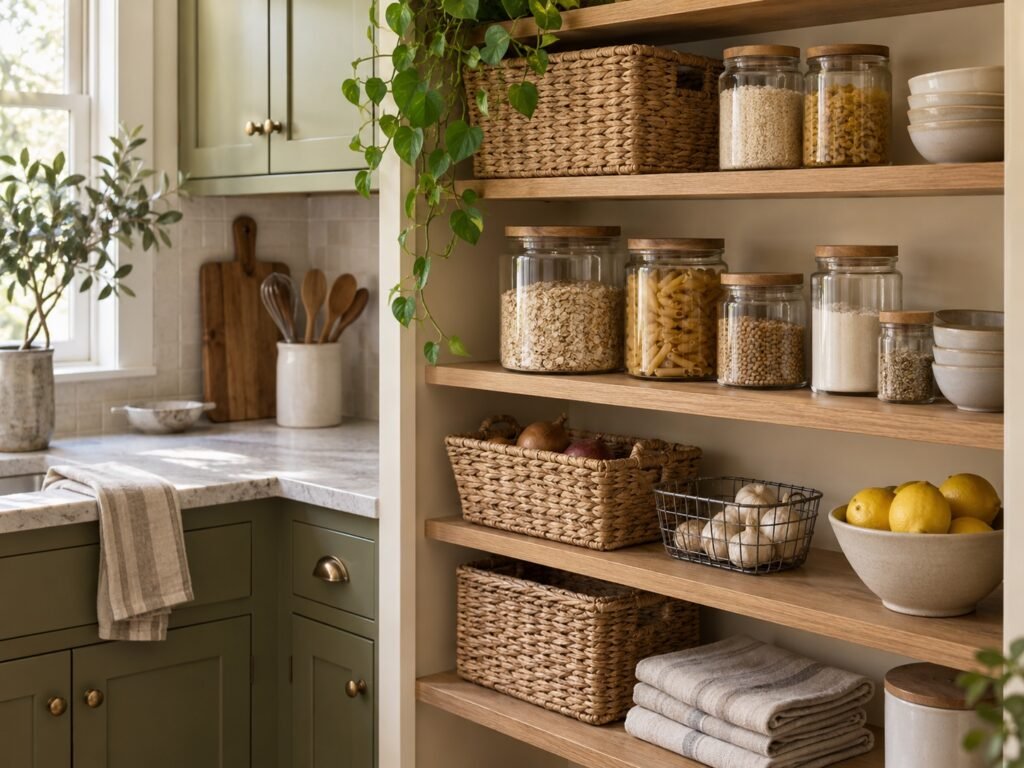
Keep supplies with different storage needs in suitable locations. Avoid using the bread box as miscellaneous overflow simply because it has a door. The guide to organizing a breakfast shelf can help separate pantry supplies from the few items that need to stay on the counter.
Make the final comparison with outlines
Mark both proposed footprints and their door openings. Try the normal breakfast routine beside each outline, then wipe the surrounding counter. Choose the layout that gives the contents a clear home while preserving access to neighboring appliances and cleaning space.
Compare kitchen storage after completing that exercise. Follow the bread box’s care instructions; both bamboo examples are listed for wiping with a damp cloth. At the next refill, check the back of the compartment before adding the new package so the defined storage area stays useful.
About these guides: RoomSprig uses AI-assisted writing and supplier product information to explain storage choices. Check the selected version, measurements and installation details on the individual product page.