
A fabric dresser and a cube organizer can both hold folded clothing, but they change how you retrieve it. Drawers pull a group toward you, while cubes usually leave the stack in place. A covered front changes what you see; it does not remove the need to arrange the contents well.
Before choosing either format, fold a typical group of clothes as you intend to store it. Include awkward items such as thick sweaters or loosely folded athletic clothing. Compare these actual stacks with the available compartments instead of counting how many drawers or cubes the organizer has.
Separate clothing from other belongings
List the groups that need storage: shirts, sleepwear, exercise clothes or accessories. Then list non-clothing items competing for the same area. If books and household supplies already occupy the proposed organizer, the clothing plan may need a dedicated section.
Give each group a place that matches its size and frequency of use. Frequently worn clothes should be easy to retrieve without lifting a stack of occasional items. Try the grouping in existing storage first; that reveals whether you need separate compartments or simply fewer mixed piles.
Choose fabric drawers for contained groups
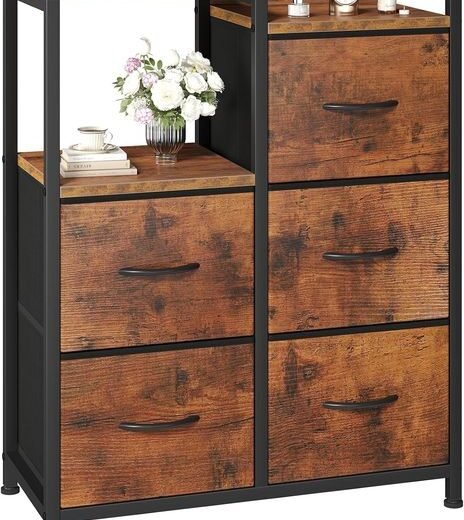
The 5-Drawer Fabric Dresser with Display Shelves combines five fabric drawers, a metal frame, a top surface and two upper display shelves with back panels. The drawers provide separate locations for folded clothes and smaller belongings.
Check the room needed in front to use the drawers. A dresser’s body may fit beside a bed while an opened drawer blocks the walking route. The upper shelves add another storage area, but do not assume that every shelf or drawer has the same loading allowance. Follow the manufacturer’s installation, loading and stability guidance.
Compare a covered cube layout
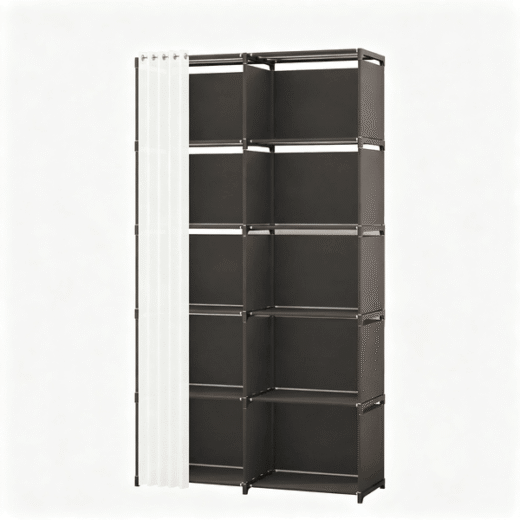
The 10-Cube Closet Organizer with Curtain uses a metal tube frame, fabric panels and a PEVA curtain. It provides ten cubbies behind a covered front and requires assembly.
This format suits a plan in which each cubby has a clear purpose. Check whether a stack can be removed from the middle or back without disturbing nearby clothing. Leave room to operate the curtain and access the compartments. A curtain creates a covered view, but it is not a promise about dust protection or the storage conditions inside.
Follow the supplied assembly and loading instructions, keep heavier belongings low, and choose a level position. A tall layout is not useful if the highest compartments are difficult for the intended user to reach.
Use open wire cubes when visibility is useful
The 4-Cube Wire Storage Organizer uses metal wire panels and connectors in a modular arrangement. Each cube is listed at 14 by 14 by 14 inches.
Compare those openings with your folded stacks and the full arrangement with your room. An open format leaves the stored clothing visible, which can help when groups are orderly and distinct. It can also make mixed stacks more noticeable. Follow the assembly instructions rather than assuming modular panels can form any configuration or support unlimited weight.
Measure the working space as well as the furniture
Mark the intended footprint and walk past it as you would when dressing. Check nearby doors, baseboards and other furniture. Then mimic opening a drawer or reaching into a cubby with both hands.
If storage must create a wardrobe area from scratch, read our guide for rooms without a built-in closet. Folded clothing is only one part of that plan; hanging items may need a separate format.
Choose the retrieval method you will maintain
A drawer is useful when you want one contained group to come forward. Cubes are useful when clear stacks can remain visible or sit behind a curtain. Neither solves overfilled storage, so leave room to return clothes after laundry.
The shelf divider and bin comparison offers another approach if existing shelves already provide the main structure. Browse bedroom storage after deciding how your clothes should be accessed, then choose the furniture that fits that action.
About these guides: RoomSprig uses AI-assisted writing and supplier product information to explain storage choices. Check the selected version, measurements and installation details on the individual product page.