
A dressing zone groups the belongings you use regularly without trying to display the entire wardrobe. Shoes, folded clothes and small accessories can occupy nearby homes while occasional pieces remain elsewhere. Start with a normal dressing sequence and identify the groups you actually reach for. Then check the access needed by each format so the zone does not become another crowded corner of the closet.
Choose the working collection
Lay out the shoes, clothes and accessories used regularly. Separate seasonal or occasional pieces from the daily group. Follow garment and accessory care guidance when deciding what hangs, folds or rolls. A convenient zone should still store each item in an appropriate way.
List the sequence: choose folded clothes, select accessories, retrieve a bag and take the shoes. Put the groups near that sequence if the closet permits it. If several household members use the same area, make the group labels clear enough that belongings return to the intended place.
Check the shoe tower’s full rotation
The six-tier rotating shoe storage tower has divided sections and a 360-degree rotating base. Measure the assembled footprint and leave space for the loaded tower to turn. Check shelf openings against your footwear, especially taller boots, rather than assuming every pair fits the same way.
Place the tower on a level surface according to its instructions. Include the surrounding door, hanging clothes and drawers in the rotation check. The outline that fits when the closet is open may still meet a door or garment as you access another group.
Give folded clothing distinct drawer groups
The large fabric clothing drawer organizers are listed as a six-piece set with handles and a foldable format. The supplier-listed size is 40 by 30 by 10 centimeters. Compare that with usable drawer width, depth and height, including rails or hardware that reduce the opening.
Plan enough room to lift a group if that is how you will use it. Keep each organizer focused on one meaningful clothing category rather than turning it into a tightly packed mix. The guide to measuring folded-clothing inserts explains the internal drawer checks in more detail.
Match a handbag insert to the inside of the bag
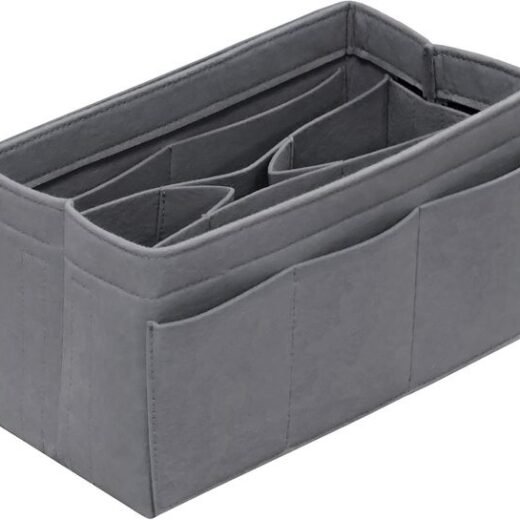
The felt handbag insert organizer with fourteen pockets separates small everyday belongings inside a suitably sized tote or purse. Measure the bag’s interior base and available space around its handles or structure. Choose by those measurements rather than a handbag brand name.
The handbag is not included. An insert can support a repeated contents group, but do not fill every pocket merely because it is available. Keep the items used regularly identifiable and use appropriate storage for anything that should not remain in an open daily bag.
Separate rolled accessories where the format suits them
The five-layer stackable acrylic belt organizer provides clear compartments for rolled belts and appropriately sized small accessories. Check usable compartment size against belt width and the thickness of the rolled form. Follow the belt’s care guidance; rolling is not the right format for every accessory.
Place the organizer on a stable, level shelf or dresser. Leave access to the layer being used, and avoid covering it with an unrelated group. The guide to handbags, belts and ties can help divide the accessory collection further.
Rehearse dressing and returning
Compare closet organization with those measurements ready. Take the items for a regular outfit, then return them to their assigned homes. Notice any group that blocks another or any frequently used piece still fetched from elsewhere.
Move one occasional group out of the daily zone before adding another organizer. After a week, check whether shoes and accessories return naturally or keep collecting on the floor. Adjust the inconvenient home rather than expanding the zone until every piece of the wardrobe occupies prime space.
About these guides: RoomSprig uses AI-assisted writing and supplier product information to explain storage choices. Check the selected version, measurements and installation details on the individual product page.