The bathroom counter can become crowded even when every item seems useful. An open toothpaste tube sits beside a spare, several replacement bottles stand behind the current ones and a new package gets opened because the older supply was hidden. The problem is often mixing daily access with backup inventory. Separating those jobs gives each group a clearer place.
Make one inventory before adding storage
Collect the spare supplies from drawers, cabinets and the counter. Keep products in their original packaging and follow their storage labels. Group unopened or spare packages by use, while keeping the currently used item separate. Check what you already own before deciding how much backup storage you need.
A practical label might read “spare soap” rather than “bathroom things.” It tells you what belongs there and makes it easier to notice a duplicate purchase. Do not force several different categories into one container just to make all the shelves look identical.
Choose a backup location by access frequency
Backups usually need less frequent access than a toothbrush or a daily moisturizer. A suitable enclosed location away from the immediate counter can work, provided the original packages fit and their storage instructions allow it. Think about how you will inspect the group without unloading every shelf.
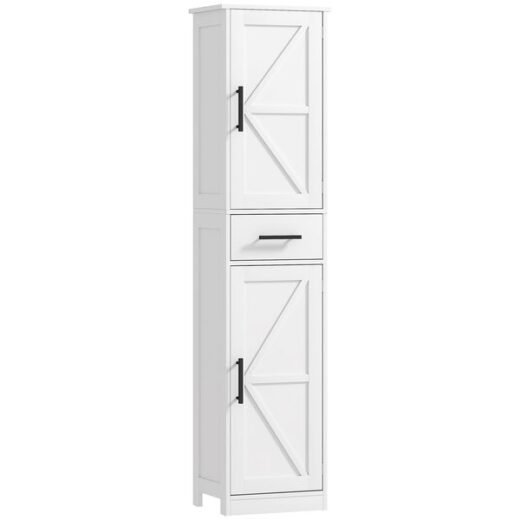
The Narrow Farmhouse Linen Cabinet with Center Drawer combines upper and lower cabinet doors, a center drawer and adjustable shelves. Its tall layout creates several possible zones, but the usable package height and opening clearance still need checking. Put the supplies you replenish most often in a reachable section rather than choosing a position solely because its door is available.
Distinguish drawers from shelf storage
Drawers can separate small spare accessories that would otherwise become a loose pile. Shelves suit larger original packages when their height and depth are compatible. The tradeoff is visibility: a drawer hides its contents until opened, while a shelf behind a door can reveal several categories at once.
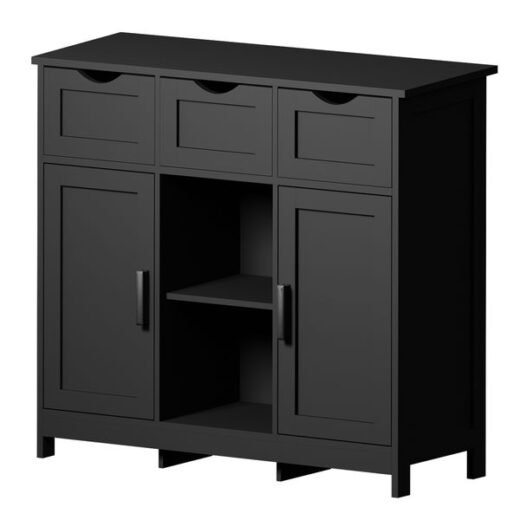
The Floor Storage Cabinet with Drawers and Shelves brings those formats together. Decide what each section would hold before you choose a location. Measure the cabinet footprint and the movement needed to open its storage sections. A cabinet that cannot open fully encourages supplies to return to the counter.
Limit the daily-use group
Keep the items used each morning together in a defined, accessible space. In a shared bathroom, give each person a small group or a consistent location rather than spreading belongings across every surface. If the group stops fitting, check whether it contains backups or occasional-use products before enlarging it.
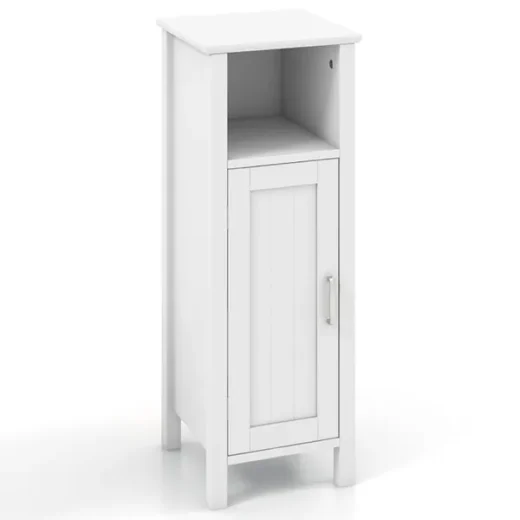
The Compact Bathroom Cabinet with Open Cubby offers an open compartment above enclosed lower storage with an adjustable shelf. The cubby can be considered for a small daily group, with compatible spare packages below. Check the actual item’s dimensions and follow its assembly and securing instructions. An open cubby is an access format, not a reason to put every daily product on display.
Create a replenishment step
When a currently used item needs replacement, take the appropriate backup and note whether another spare remains. Choose one place to record shopping needs. This avoids keeping an empty package on the counter as a reminder while simultaneously opening another package elsewhere.
For example, a household may keep current hand soap at the sink and its spare packages on one designated shelf. A spare roll or unopened toiletry should have a similarly clear home. Adjust the quantity to actual use and available storage rather than treating an empty shelf as an invitation to stock more.
Review the system while putting new supplies away. Move older suitable packages to a visible position, keep labels readable and dispose of items according to their product guidance when appropriate. This check takes less effort when categories have defined boundaries.
Explore bathroom storage by the opening style you need. For the daily surface, read planning a bathroom counter reset. If spare rolls are the main issue, comparing over-toilet storage with a roll holder helps keep the solution proportionate.
About these guides: RoomSprig uses AI-assisted writing and supplier product information to explain storage choices. Check the selected version, measurements and installation details on the individual product page.