Clean laundry can stay in a basket because putting it away involves several small decisions: whose clothing it is, where it belongs and whether the destination has room. A temporary sorting station can reduce those decisions, but only if it remains temporary. Define what arrives, how it is grouped and when the station should be empty again.
Separate clean collection from dirty collection
Assign the clean-laundry stage a distinct container or a clearly understood use period. This helps prevent an ambiguous basket from becoming a place where clean and unwashed items are mixed. The distinction can be a label or a consistent location; it does not require every household container to be a different color.
Start with one finished laundry group. Sort it on an appropriate clean surface according to the garments’ care needs and where the items will go. Keep anything still awaiting its next care step separate rather than treating the whole group as ready for storage.
Choose groups that match the put-away route
Sorting by person can work when each person returns their own clothing. Sorting by destination can work when one person puts away linen, bedroom clothing and bathroom towels. A mixed approach may also fit, but the groups should correspond to an action someone will actually take.
For example, make a bedroom group, a linen group and a bathroom group instead of a large pile labeled “clean.” This reduces the need to sort everything again at the first cupboard. Leave enough room to lift each group without disturbing the others.
Compare a cart with removable bags
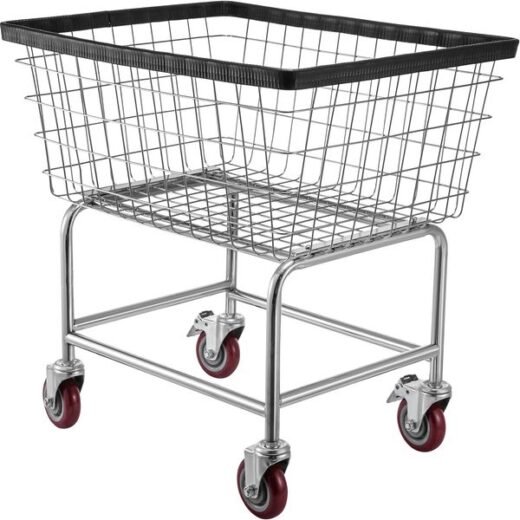
A cart can bring one open group along a suitable route. The Rolling Steel Wire Laundry Cart has an open wire basket and four casters. Measure doorways and turning areas before selecting it. A useful transport format must also have a defined parking spot while the laundry is being sorted.
The Two-Tier Rolling Laundry Sorter with Four Bags provides removable canvas bags in a two-tier frame. If considering it for clean sorting, assign the bags to the destinations in your routine and keep that role separate from dirty collection. Check the bag access at each tier and follow the listed care instructions. Four available bags do not require you to create four groups when two are enough.
Prepare shelf destinations before carrying the laundry
A clean-laundry system stops working when the final shelf is already full. Check the destination before adding another storage item to the temporary station. Remove belongings that do not belong in that category and make room for the normal clothing rotation.
The Linen Closet Bins with Clear Windows, Set of 4 offer fabric bins with clear front windows and pull tabs. They can define suitable shelf groups while allowing contents to be identified. Compare the bin dimensions with the usable shelf space and allow room to pull out or lift the bin. Avoid filling a bin so tightly that returning folded items becomes difficult.
Give drawers practical boundaries
Drawers need enough room for the folded clothing and the organizer itself. Measure the interior, including any runners or obstructions, and check how the drawer closes with the intended fold height. An insert should create a usable section rather than consume most of the available space.
The Large Fabric Clothing Drawer Organizers, 6-Pack are designed for folded garments and have a foldable fabric format. Match the sections to the clothes you regularly return. A drawer organized into everyday tops and occasional clothing may need different group sizes; do not divide it equally just because the organizers come in a pack.
Define the end of the session
Choose a clear completion point: each group returned to its final home and the temporary station empty. If a household member has their own group, agree where it waits and when it should be collected. Keep leftover items visible enough to resolve instead of hiding them in another bag.
Compare the formats in laundry storage. For the transport decision, read choosing a cart or rolling hamper. At the destination, measuring drawer organizers for folded clothing helps make the final return step easier to use.
About these guides: RoomSprig uses AI-assisted writing and supplier product information to explain storage choices. Check the selected version, measurements and installation details on the individual product page.