A small coffee and tea station should make a drink easier to prepare without turning the entire counter into storage. Start with one normal morning: choose a drink, find a mug, add what you use, then put the supplies away. The station only needs to support that sequence. Backup packages and rarely used serving pieces can stay nearby without occupying the same surface.
Choose a boundary for the station
Measure the counter space available after leaving the preparation area clear. Include the height beneath cabinets and the routes of appliance lids, drawers and cords. Follow the appliance’s instructions for ventilation, placement and power; a storage accessory should not interfere with those requirements.
Use removable tape or a paper outline to mark the proposed station. Place the appliance and an ordinary mug inside it, then make room for your hand to work. This exercise often reveals that the station needs fewer supplies on display rather than another tall organizer.
Keep capsule compatibility separate from capacity
If you use coffee capsules, identify their exact format before choosing a holder. The rotating coffee pod holder for Nespresso Vertuo capsules is designed for that format, stores up to forty compatible capsules and is not compatible with K-Cup pods. Its listed base diameter is 7.1 inches. Leave overhead room to load and remove pods, not just enough height for the empty frame.
A holder’s capacity does not need to dictate how many capsules stay on the counter. Keep a useful working selection and store unopened boxes elsewhere. Place the holder so it can rotate without brushing against the appliance, a wall or a neighboring tray.
Organize tea in its original wrappers
Individually wrapped tea bags can be grouped by type or the order you use them. Start with their original boxes: trim the collection to the varieties you actually drink, keep the labels visible and arrange them so one package can be removed without moving the others. A shelf beside the station may work better than another container on the counter.
If you later choose a divided tea box or a book-style organizer, check the wrapped sachet sizes against the usable compartments. Allow room to open the lid or storage pages and to remove a sachet with your fingers. Keep the tea’s original storage directions and any relevant date information accessible. A dedicated organizer is useful only when it makes browsing and refilling easier than the packaging you already have.
Give long tools and paper supplies distinct places
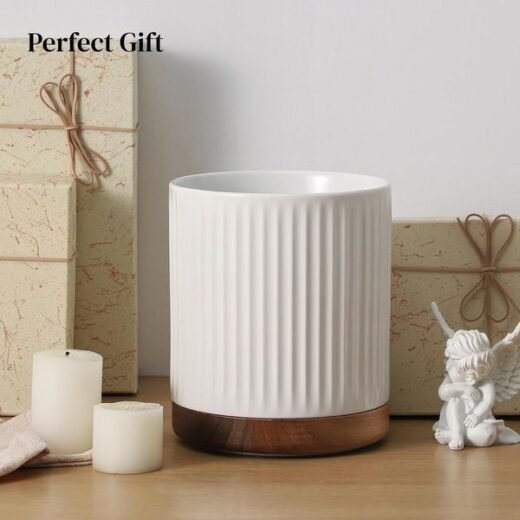
A rotating ceramic utensil holder can group suitable long-handled tools in an upright crock. Use it only if those tools genuinely belong at this station. Check clearance for the tallest tool beneath wall cabinets and leave space for the base to turn. Do not add kitchen utensils merely to fill the container.
For folded napkins, a clear acrylic napkin and guest towel tray has an open top and a U-shaped front opening. Compare the paper’s folded size with the tray’s inner dimensions. A defined paper supply is easier to keep orderly than several loose packages, but the tray should leave the drink-making surface accessible.
Separate the working supply from the reserve
Keep enough daily supplies to use the station comfortably, then identify a nearby shelf for backups. Arrange the reserve by drink type so restocking does not require searching through unrelated pantry items. Keep original instructions and date information accessible where relevant. Do not assume an organizer changes the storage conditions the contents require.
At the end of a week, note which supplies you repeatedly fetched from elsewhere and which displayed items were never used. Adjust the boundary accordingly. The most useful station may be smaller than the first arrangement because it keeps only the items that earn their place.
For this kitchen storage group, compatibility and retrieval clearance matter more than displaying the maximum amount. If breakfast supplies share this area, planning a dedicated breakfast shelf can keep the counter from becoming the household’s entire morning pantry.
About these guides: RoomSprig uses AI-assisted writing and supplier product information to explain storage choices. Check the selected version, measurements and installation details on the individual product page.