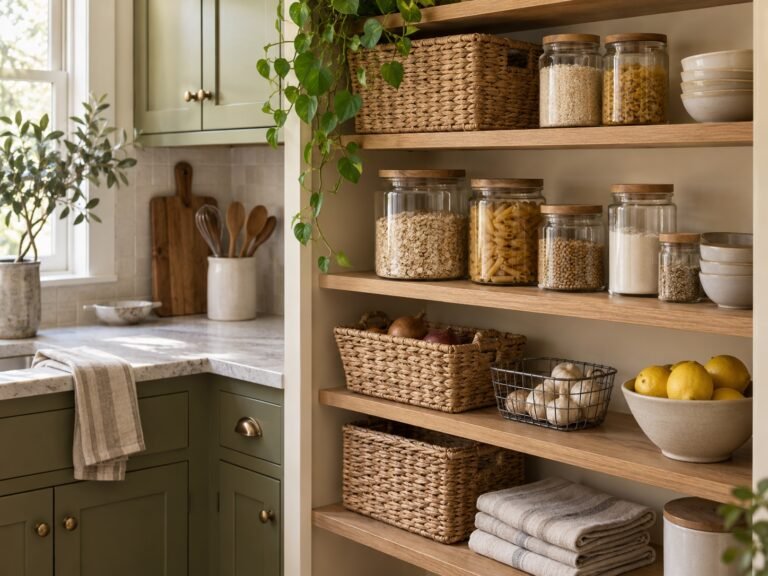
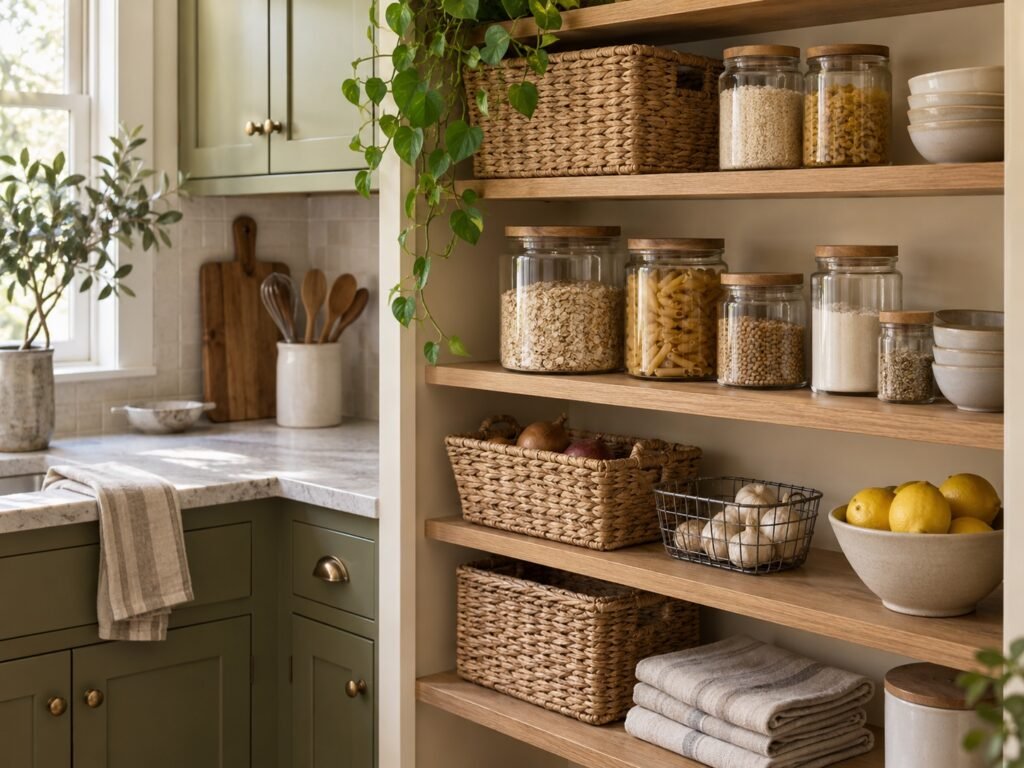
You do not need a walk-in pantry to give groceries a clear home. A freestanding cabinet, an existing cupboard or a suitable door can each support a useful pantry layout. The best choice depends on where groceries arrive, how you cook and how much access the room permits. Start by grouping the packages you actually keep, then choose a storage format that handles those groups without obstructing daily movement.
Plan around the packages, not an ideal photograph
Gather a representative selection of groceries: tall bottles, wide boxes, cans, packets and larger backup packages. Measure the tallest and deepest items. Separate daily supplies from reserves and occasional ingredients. Keep product labels and storage instructions available, and place each item in conditions appropriate for that item.
A cabinet can look spacious when empty yet require awkward stacking once your tallest boxes are inside. Make a list of groups that need upright storage, those that can share a bin, and those that should remain easy to identify individually.
Layout one: a dedicated freestanding cabinet
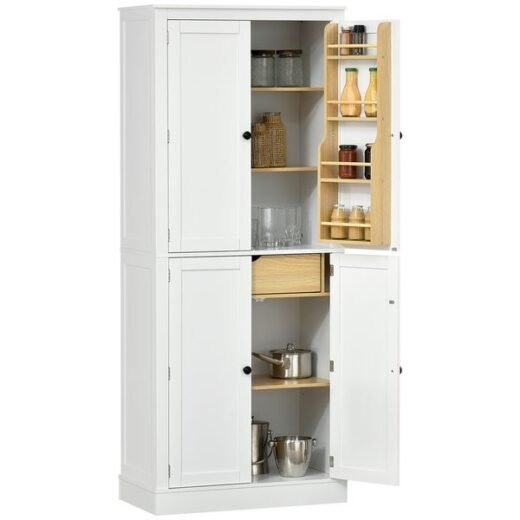
A cabinet works when you have a stable floor location with room for its doors to open. The pantry cabinet with eight door racks and a drawer offers five shelving tiers, upper-door racks with retaining bars and a drawer concealed behind the lower doors. Its lower shelves have three height positions. Compare those compartments with the package groups rather than treating every shelf as interchangeable.
Measure front clearance as well as the floor footprint. Door racks add storage, but their contents also move with the doors and occupy space when the cabinet closes. Assembly is required, and the supplied wall-securing strap should be installed according to the instructions. Choose the wall location with that requirement in mind.
Layout two: adjustable enclosed shelving
The pantry storage cabinet with interior door racks combines adjustable shelf positions with racks inside the doors. This format can suit a collection with varied package heights. Plan tall and short groups separately so adjusting a shelf for one bottle does not waste an entire shelf’s usable space.
Allow room for the doors to open fully and follow the supplied wall-securing instructions. Put the most frequently retrieved group at a comfortable height. Reserve more awkward spaces for items used less often, while following loading guidance and avoiding a difficult reach for heavy or bulky packages.
Layout three: suitable door storage
If floor space is limited, consider whether a pantry door can carry a separate group. The nine-tier over-door pantry organizer has adjustable shelves and a listed overall size of 16.5 by 7.1 by 76.8 inches. It is listed for doors up to 2 inches thick with a top gap greater than 0.06 inches, and it requires at least 7.1 inches of pantry clearance.
Those dimensions do not replace a closing test. Check hinges, interior shelves, trim and the sweep of the organizer as the door moves. Follow the installation and loading instructions. If the door will not close normally with a loaded rack, use a different location rather than forcing a pantry layout onto it.
Combine layouts without duplicating everything
One cabinet can hold daily cooking supplies while another location holds reserve packages. Door storage can take a defined group such as appropriately sized packets without becoming miscellaneous overflow. The groups should remain obvious enough that another household member can put groceries away without asking where every item belongs.
For example, keep the current breakfast packages together near a convenient pickup point and place unopened backups in one clearly marked area. Before grocery shopping, review the backup group first. This is more useful than arranging every package by color while similar items are scattered across several locations.
Review access after the first grocery refill
A layout that works with half-empty shelves may become cramped after shopping. Check whether newly added packages block labels, whether door racks hit stored items and whether one group spills into another. Adjust shelf heights or reduce the number of items in the daily zone before adding more containers.
Your package measurements give the pantry organization plan a practical foundation. Giving pantry backups a separate home explains how to keep reserve groceries from taking over the most accessible shelf.
About these guides: RoomSprig uses AI-assisted writing and supplier product information to explain storage choices. Check the selected version, measurements and installation details on the individual product page.