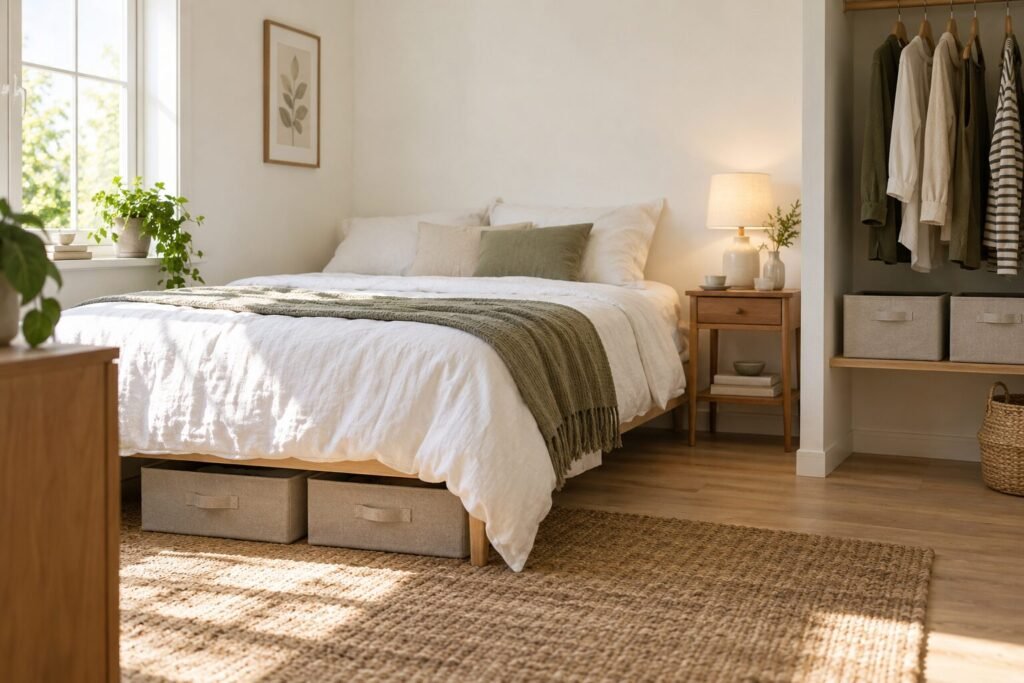
Seasonal storage works best when it frees the daily routine rather than hiding everything in the least convenient space. Some belongings can remain under the bed for months. Others, such as an extra blanket during changeable weather, may need to stay easier to reach.
Start by listing the items that are leaving everyday storage. Add a simple note about when you expect to use each group again. This distinguishes genuinely occasional belongings from items that are merely used less often.
Assign locations by retrieval frequency
Keep a regularly borrowed blanket or transitional clothing on an accessible shelf where possible. Put items needed only at a seasonal change in a location that can tolerate a longer retrieval process. Do not make an inconvenient location the default just because it has spare capacity.
Consider who will retrieve the items. Bending to pull out a bin may not be practical for every household member. A high shelf can create a different access difficulty. Choose locations around the people using them as well as the available furniture.
Separate a mixed-season group before packing it away. If one sweater is still worn during cooler summer evenings, keeping it with daily clothing may prevent repeatedly opening a bag otherwise intended to stay closed until autumn.
Measure the under-bed route
Check the floor-to-frame height at the lowest obstruction, including crossbars. Then measure between bed legs and assess the area where a container will be pulled out. Bedside furniture and rugs can change the usable route.
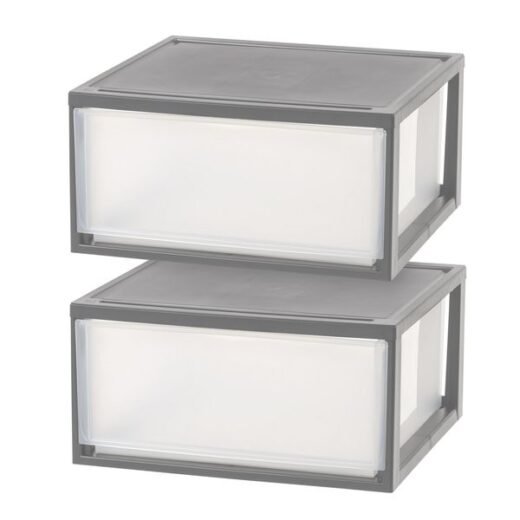
The 47-Quart Modular Under-Bed Storage Drawers have a plastic drawer format and a modular, stackable design. They require enough height beneath the bed and enough room in front for a drawer to open. A capacity figure is not a substitute for these measurements.
Our under-bed storage format guide compares how drawers and bags change the retrieval process. Choose the format before deciding how many groups the space should hold.
Give rolling bins space outside the bed
The Rolling Fabric Under-Bed Storage Bins, 2-Pack have clear zippered tops, wheels and two side handles. Each listed polyester bin measures 26 by 15 by 5.9 inches.
Those measurements can help screen a bed location, but the filled bin also needs a place outside the frame where its cover can open. Avoid packing the farthest corner with the group you expect to borrow first. Keep seasonal clothing together in recognizable groups, such as summer tops or spare sweaters, rather than mixing them with unrelated bedroom objects.
Compress only suitable soft items
The Zipper-Compression Bedding Storage Bag uses a main zipper and a separate compression zipper in a nylon bag. Its zipper-based design does not require a vacuum extractor and folds down when empty.
Check the care requirements of the bedding or clothing before choosing compression. Fold suitable soft items and close the zippers without forcing an overfilled bag. Do not assume a particular space reduction or apply the same packing pressure to every textile. Keep an occasional-use blanket accessible if retrieving it would otherwise mean unpacking the whole seasonal group.
Use visible boxes for shelf groups
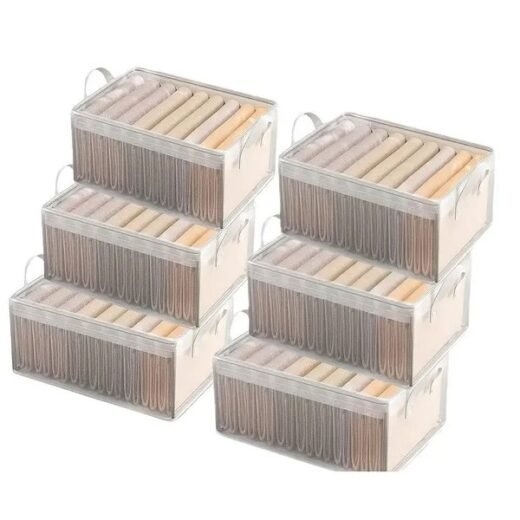
The Clear Steel-Frame Closet Storage Boxes, 6-Pack combine transparent PVC, a steel frame and zippered closures. They fold when empty and can provide separate visible groups on a suitable shelf.
Compare the actual box dimensions with the shelf and allow access to the closure. Visibility helps only if the relevant contents face outward. Do not stack filled boxes beyond the supplier’s loading instructions or assume the framed format has an unlimited stacking allowance.
Leave space for the seasonal swap
Prepare stored textiles according to their care requirements and keep each group clearly identifiable. Leave room to remove one container without having to relocate every other item. At the seasonal change, review the contents before returning them to daily drawers.
If bulky bedding is the main issue, see our guide to bedding storage without vacuum bags. Browse bedroom storage with separate measurements for shelves and under-bed space. A useful arrangement is the one that keeps daily items convenient and makes the next seasonal change straightforward.
About these guides: RoomSprig uses AI-assisted writing and supplier product information to explain storage choices. Check the selected version, measurements and installation details on the individual product page.