A crowded under-sink cabinet is often a layout problem rather than a shortage of containers. Pipes, hinges and the sink bowl occupy different parts of the space, while the cabinet door hides how much room is actually usable. A good plan starts with those obstacles. Buying a matching pair of organizers before measuring them can leave you with two pieces that fit neither side.
Make a usable-space sketch
Empty the cabinet and draw a simple view from above. Mark the drainpipe, supply lines, disposal if present, door hinges and any raised cabinet lip. Measure clear width at the narrowest point, depth from the opening to the back, and height beneath the lowest obstruction. Repeat the height measurement on each side of the plumbing. A single overall cabinet measurement misses the shapes that determine whether a basket can slide.
Then mark the space needed to pull an organizer forward. Open the door to the angle you normally use, rather than holding it unnaturally wide. Check whether a neighboring drawer handle or appliance interrupts the route. Keep plumbing connections accessible; storage should not require dismantling a shelf to inspect a leak.
Sort by the way you reach for supplies
Create three groups: items used at the sink every day, cleaning supplies used weekly, and backups. Keep products in their original labeled containers and follow their storage instructions. Remove items that do not belong here rather than using another basket to hide them. Paper goods and anything vulnerable to moisture usually deserve a different storage location.
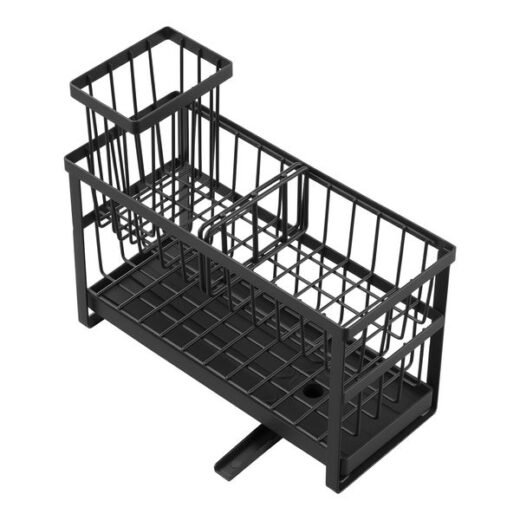
For example, a dish brush and sponge may belong beside the sink, while their replacement supplies sit inside the cabinet. A two-tier sink caddy with a drainage spout can organize that daily group above the worktop. Its spout needs to reach the sink, so measure its placement rather than assuming any corner will drain effectively.
Choose the organizer for the obstacle
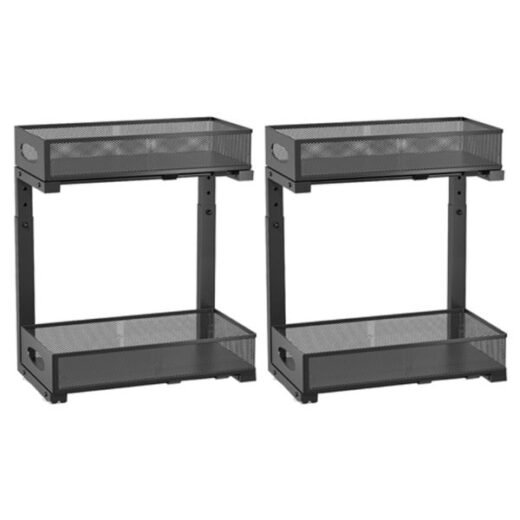
A sliding lower basket helps when you can fit the frame and pull it out without hitting the pipes. The adjustable pull-out under-sink organizers include two rack widths and five height settings. Their listed footprints are 15.55 by 8.46 inches and 16.14 by 9.06 inches; listed height settings range from 13.98 to 17.13 inches. Compare those dimensions with each side of your sketch, including the cabinet opening.
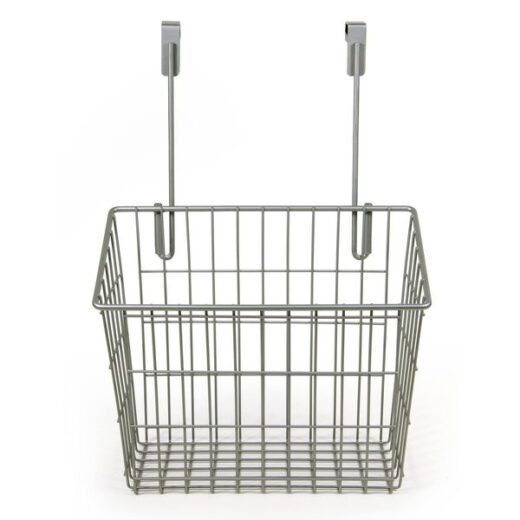
If floor space is limited, the inside of a door can hold a small separate group. Over-cabinet-door wire baskets are another option, but their hooks, basket depth and stored items all consume space. Test door thickness and closing clearance. A basket that fits the door can still collide with a shelf or bottle when the door closes.
Test the layout before filling it
Use cardboard outlines for the proposed footprints. Move them through the opening and check the pull-out route. Next, place your tallest bottle where it would sit and confirm it clears both the shelf above and the plumbing behind it. If you need to turn the bottle sideways every time, choose a different location or shelf height.
Load the everyday group first, then the weekly group. Leave backups in a clearly identified zone so they cannot drift forward and block access. Avoid wedging containers against pipes. The aim is to remove one item without shifting several others, not to occupy every available inch.
Keep the arrangement easy to reset
After a week, look at what has collected on the cabinet floor. A recurring pile usually signals that a category is inconvenient to put away. Move that category closer or reduce the amount stored, rather than adding a label to an awkward arrangement. Wipe the cabinet and inspect the accessible plumbing during your regular cleaning routine.
The measurements you recorded provide a useful filter for kitchen storage options. If the next difficult cabinet is a corner unit, the guide to planning a blind-corner organizer uses the same obstacle-first approach.
About these guides: RoomSprig uses AI-assisted writing and supplier product information to explain storage choices. Check the selected version, measurements and installation details on the individual product page.