
Wire shelving can be useful for visible closet storage, but some smaller belongings need a more continuous surface. A compatible shelf cover can change how those items sit on the rack. Before choosing one, check the shelf’s dimensions and edge shape, along with what you intend to place on it.
A cover is an addition to an existing shelf, not a new shelf with independent support. Keep the underlying rack, mounting and loading instructions part of the plan.
Identify the specific reason for adding a cover
List the belongings that are awkward on the current surface. You may want a defined place for smaller groups or a continuous base beneath suitable folded items. If the problem is a lack of shelf space, a cover does not solve it; the rack still has the same footprint.
Decide which shelves need the added surface. Covering every level by default can hide useful wire sections without helping the contents. A mixed arrangement may suit the closet better if some belongings already sit comfortably on the open rack.
Measure width, depth and corners
Measure the usable rack surface and note its front and side edges. Compare those details with the cover’s specified dimensions and attachment arrangement. Include any brackets or projections that interrupt the usable area.
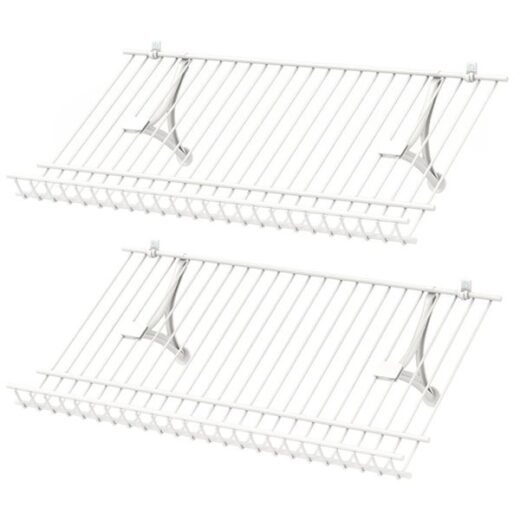
The Wall-Mounted Wire Closet Shelves come as two metal shelves, each listed at 24 by 12 by 1 inches. Those dimensions describe this shelf set; they do not establish compatibility with every cover. Check both products independently before planning them together.
Know what the cover is made from
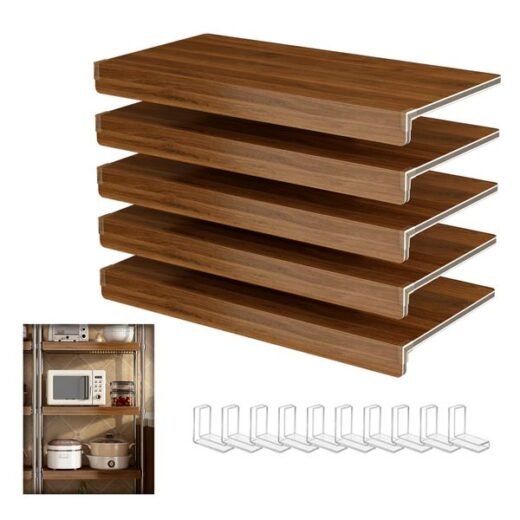
The PVC Wire Shelf Covers with Woodgrain Finish are a five-pack of PVC covers with a printed woodgrain appearance. They are not wood boards. The supplier lists ten acrylic right-angle holders with the set, so compare that arrangement with the rack’s actual shape.
Follow the installation and care guidance for the covers. Support them on the underlying rack as intended, and avoid bending the right-angle edges or exceeding the stated loading instructions. Do not assume that the appearance of a solid shelf changes what the supporting wire structure can hold.
Check attachments again after adding a surface
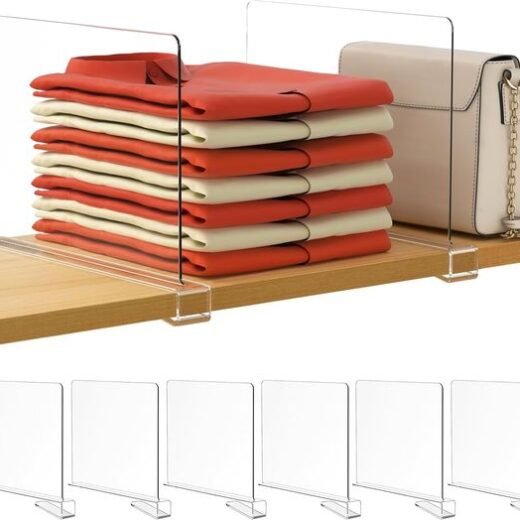
A shelf cover can change the edge presented to another accessory. If you also want dividers, compare the resulting thickness and shape with the divider’s mounting requirements. Compatibility with the bare rack does not automatically mean compatibility with the covered rack.
The Clear Clip-On Closet Shelf Dividers slide onto a compatible shelf, and the supplier warns against shelves thicker than 0.95 inches. Check that requirement against the actual intended arrangement and do not force the clip over an unsuitable edge.
Lay out the contents before filling the shelf
Place the intended groups on paper footprints or measure them together. Leave room to remove one item or container without disturbing neighboring groups. A continuous surface is most useful when it supports a clear arrangement rather than a larger miscellaneous pile.
For example, one section might hold a defined folded-clothing group while another uses a suitable bin for small accessories. Make the return position obvious. The cover provides the surface; the grouping provides the organization.
Review the underlying shelf installation
For wall-mounted racks, complete the supplied mounting instructions using fixings appropriate for the actual wall. A cover should never be used to disguise an installation issue or an unsupported section. Confirm the rack and the add-on both suit the chosen location before loading.
Compare dividers and bins for the contents, and read our reach-in shelf planning guide for the wider layout. Browse Closet Organization with the shelf measurements, cover material and attachment checks clearly recorded.
About these guides: RoomSprig uses AI-assisted writing and supplier product information to explain storage choices. Check the selected version, measurements and installation details on the individual product page.