
Office supplies can crowd a desk even when everything has a container. The question is whether each group needs to be on the work surface at all. A desktop organizer keeps a small working collection nearby; a rolling cabinet moves a larger reserve into drawers. Choose between them by frequency of use, the space you need for work and the clearance available around the chair and neighboring furniture.
Protect the work area first
Clear a surface large enough for your normal work: keyboard, notebook, paperwork or whatever the task requires. Use the desk for a full session with that area unobstructed. Notice which supplies you reach for repeatedly and which remain unused.
Divide the collection into daily, occasional and reserve groups. Daily does not necessarily mean displayed; an accessible drawer may be just as convenient. Occasional and reserve supplies should not take the best desk space solely because a desktop container has room for them.
Measure the loaded organizer and retrieval space
Record the available desktop width and depth after protecting the work area. Check height beneath any shelf and the space needed to open small drawers. Include pens or folders protruding above the frame. An organizer’s empty dimensions do not show the full space used by its contents.
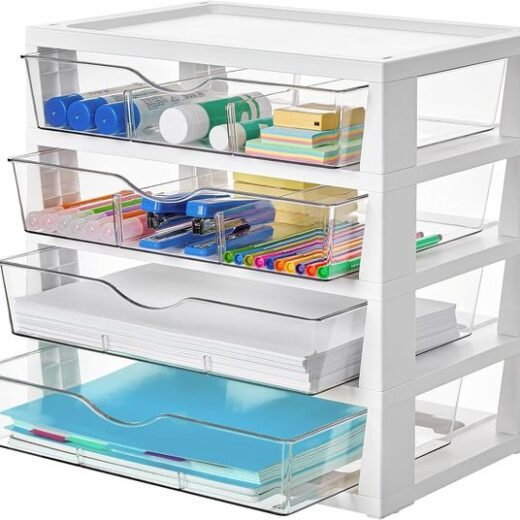
The clear four-tier desk organizer with drawers separates paper groups above contained loose supplies. Assembly is required. Check tray openings with your paper and folders, and leave direct access to the drawers. Keep the daily group specific so the unit does not become a collection of every loose object on the desk.
Choose small drawers when visibility helps
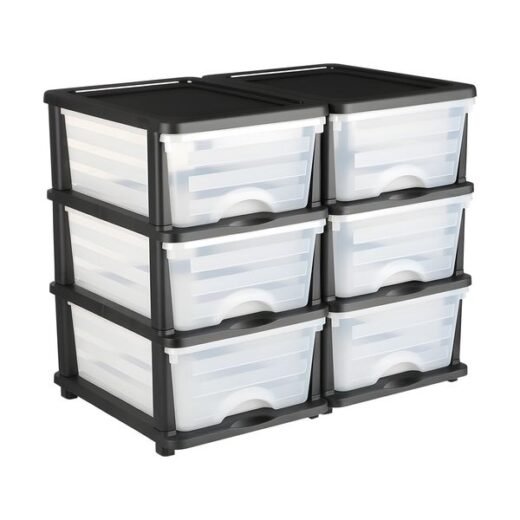
The clear six-drawer storage organizer provides separate clear plastic drawers for workspace or household supplies. Compare drawer openings with the actual objects before assigning each group. A broad stationery item may need a different home from small clips or labels.
Choose a stable surface and follow the supplier’s loading guidance. Clear fronts can help identify a group, but they do not replace useful categories. Label by task if the contents are visually similar, and leave each drawer easy to close without pushing loose items aside.
Use a rolling cabinet for larger reserve groups
The five-drawer rolling office storage cabinet has casters, drawer pulls and slides, plus a top surface. Measure the full parked footprint and room to open the drawers. If it sits near or beneath the desk, include knee space, chair movement and the route for standing up.
Use the supplied guidance for caster locks and drawer loading, and keep heavier items low as directed in the catalog. A wheeled cabinet still needs a stable, level position and a clear parking place. The under-desk storage guide helps check whether nearby furniture would interfere.
Compare combined formats by their actual job
For any organizer that combines paper trays, small drawers and upright holders, list the supplies that would use each section. Check tray openings against your largest folder, drawer travel against nearby equipment and clearance for the tallest tool. Include the loaded organizer’s height in the plan rather than comparing only the empty frame.
Use a combined format only when those groups belong together at the desk. A large paper collection may need its own status system, and extra pens may belong in reserve storage. Leave unused sections empty while testing the routine; the number of components alone does not establish value or make the unit the right choice.
Run the daily-use and refill tests
Retrieve the supplies for one normal task, then return them. Next, simulate refilling a daily group from reserve storage. If both movements are easy and the work surface stays clear, the desktop and cabinet groups are in sensible locations.
Compare office organization using those measurements. If papers dominate the collection, a three-status paper system can prevent a stationery organizer from becoming an unexplained document archive. Finish by moving one rarely used group off the prime desk area and reassess the space before adding another container.
About these guides: RoomSprig uses AI-assisted writing and supplier product information to explain storage choices. Check the selected version, measurements and installation details on the individual product page.