
The choice between horizontal trays and upright files depends on how your documents are used. Loose sheets can form a working stack, while bound notebooks or labeled folders may be easier to browse upright. Neither orientation automatically organizes the papers. Start with the actual document shapes and the route used to retrieve them, then choose compartments that support that routine.
Separate shape from status
Group loose sheets, folders, notebooks and magazines. Measure each format, including covers, tabs and anything projecting beyond the page. A compartment that accepts a bare sheet may not fit the folder used to keep those sheets together.
Next, decide which documents are incoming, active or retained elsewhere. The three-status paper system explains that distinction. Orientation answers how a group sits; status answers why it belongs there and what should happen next.
Choose horizontal access for a flat working group
The five-compartment literature and paper organizer provides adjustable shelves in a desktop or countertop format. Check the opening width and depth against the documents and leave hand clearance above the stack. Use the supplied instructions for assembly and final shelf positions.
A flat group can be convenient when several sheets are used together. Keep the stack specific enough that you can retrieve the needed document without searching through unrelated projects. More compartments should create useful distinctions, not a series of unexplained piles.
Consider the viewing angle. If a horizontal tray sits above eye level, you may not be able to identify its contents without pulling them out. Use an appropriate label or another position rather than relying on the empty tray’s appearance.
Choose upright access when covers and tabs help
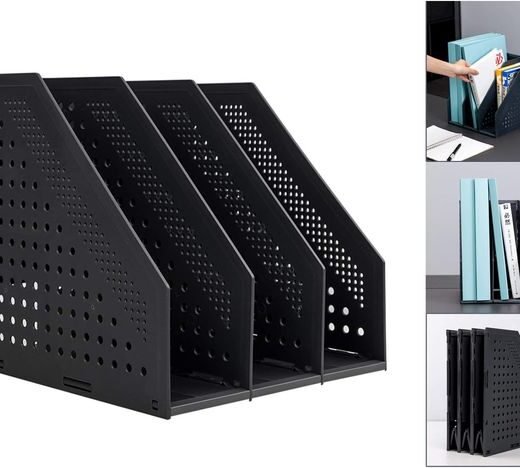
The collapsible three-compartment magazine file organizer separates appropriately sized documents into vertical sections. Check notebook height and depth, and avoid forcing a bulky folder into the compartment. Place the organizer on a level surface according to its instructions.
Upright groups work best when their identifying information can be seen. Turn folder labels toward the normal approach and leave space to grasp the spine or edge. If thin sheets sag or disappear between larger covers, group them appropriately or use a different format.
Do not assume the number of sections determines the number of projects you can manage. One thick working folder may occupy a section by itself, while a small group of thin notebooks may share another. Judge the actual collection.
Compare combined desktop formats carefully
A desktop unit that combines paper levels with small drawers or pen storage needs several access checks. Measure the paper openings, the space needed to slide a drawer out and the clearance for lifting the tallest tool. Place the full outline beside the equipment you use every day; a compact outer footprint can still leave a monitor, keyboard or writing area crowded.
Choose a combined unit only if those groups belong in the same desk location. Otherwise, small supplies can occupy a separate drawer while the documents use the orientation that suits them best. Keep empty compartments available during the first week instead of filling them with unrelated items just because space remains.
Test removal and return before assigning every compartment
Place a representative full group into a comparable outline or check the listed internal measurements carefully. Rehearse lifting the group out and returning it. Include the surrounding lamp, monitor and wall shelf so the test reflects the actual desk.
The desktop organizer and rolling cabinet guide helps decide whether the papers should remain beside reserve stationery. Compare office organization using your document measurements and viewing angle.
End with one label and one rule for each working compartment. Review it after a week: if the papers still form a mixed collection with no next step, change the grouping before buying another tray. A useful orientation makes an already clear document group easy to see and retrieve.
About these guides: RoomSprig uses AI-assisted writing and supplier product information to explain storage choices. Check the selected version, measurements and installation details on the individual product page.