Hidden kitchen trash storage can mean a freestanding cabinet with a tilt-out front or bins installed inside an existing base cabinet. Both conceal the containers, but the fit checks and daily movements are different. Start with the waste and recycling groups you need, then decide which location gives you convenient access for depositing waste, removing a full bag and cleaning the area.
Choose the location before the container format
Notice where waste is created during meal preparation and cleanup. A bin across the room may stay out of the way yet make every task inconvenient. A bin beside the main preparation area may be convenient but conflict with a dishwasher door or a narrow walkway.
Measure the surrounding movement space. Open neighboring doors and drawers and stand where you normally work. The chosen system needs room both in everyday use and when you remove the container. Plan an unobstructed route for a full bag rather than considering only the smallest opening needed to put something inside.
Freestanding tilt-out storage uses its own floor space
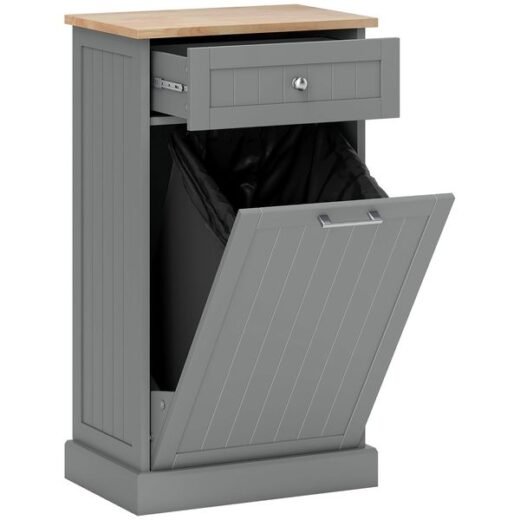
The tilt-out trash can cabinet with drawer has an MDF body, a lower tilt-out compartment and an upper storage drawer. Assembly is required, and a wall-securing anchor is included. Measure your intended trash can; a cabinet’s general description is not a guarantee that an existing bin fits.
Allow room for the front to tilt, including any projection of the container during use. Check the drawer above separately. Secure the cabinet as directed in the assembly instructions. Its position should support that installation requirement without blocking the door of a neighboring cabinet or appliance.
This format can suit a room where a suitable base cabinet is unavailable, but it consumes floor space permanently. Mark the footprint with tape and keep it in place for a normal kitchen session before deciding that the room can spare the area.
Installed pull-out bins require a compatible base cabinet
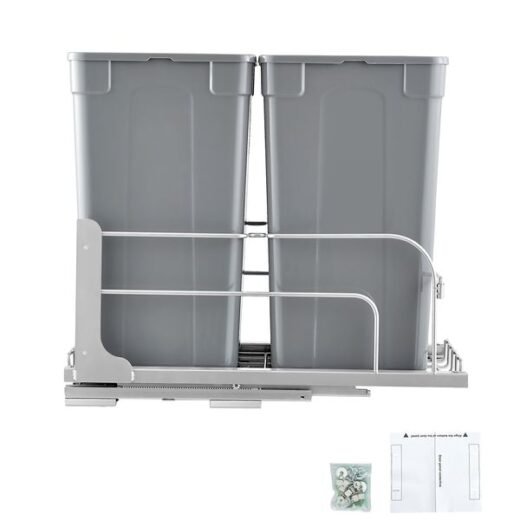
The dual 27-quart pull-out trash bins with soft-close slides include two bins, an under-cabinet sliding frame and a door-mount kit. Check the clear opening, interior depth and height, and identify whether the cabinet is framed or frameless. Hinges, plumbing and fixed parts of the cabinet must remain in the measurement.
Use the installation instructions for the exact required arrangement. Two listed bin capacities tell you the size of the containers, not whether the frame fits your cabinet. Also allow full slide travel and access to lift the bins out. A nearby handle or door may interfere with removal even if the frame can be installed.
Keep supporting supplies separate
Replacement bags and small related supplies may belong in the drawer or a nearby storage group. A 14-inch soft-close pull-out cabinet drawer is an example of shallow sliding storage for a suitable cabinet. It is not a substitute for the waste-bin frame, and its different mounting methods have their own clearance requirements.
Keep food and cleaning supplies organized according to their own requirements rather than using every spare gap around the bin. If plumbing shares the cabinet, the under-sink planning guide can help you preserve access to pipes and understand the available shape.
Test the emptying and cleaning routine
Imagine removing the lid if one is used, taking out a full container, replacing the bag and returning it. Can you do that without shifting another appliance or holding a door at an awkward angle? Check how the surrounding surfaces will be cleaned and follow the product’s care guidance.
Compare kitchen storage based on these movements rather than the closed cabinet appearance. Choose separate waste and recycling groups that fit your household’s local collection requirements, then label them clearly. Once the system is installed, test it empty before adding bags and contents. The cabinet should hide the group while keeping the less attractive work of emptying it straightforward.
About these guides: RoomSprig uses AI-assisted writing and supplier product information to explain storage choices. Check the selected version, measurements and installation details on the individual product page.