A serving station does not need to occupy a whole cabinet or remain fully displayed all week. It needs a clear home for the supplies you bring to the table together. Start with your usual meal or gathering: napkins, the utensils used for serving and any small table accessories. Grouping those items can reduce the number of separate trips while keeping the main cooking area clear.
Decide whether the station is permanent or temporary
If you serve meals in the same area daily, a small defined station may remain useful there. If supplies are only needed for occasional gatherings, keep the group together in storage and bring it out when needed. A temporary station still needs a realistic place to live afterward.
Measure the surface you intend to use. Allow room for plates and drinks as well as the organizer itself. Walk through the serving route and check whether someone reaching for a napkin would interrupt another person’s access to the food. The most convenient location may be slightly away from the busiest preparation surface.
Size the napkin group to the tray
The clear acrylic napkin and guest towel tray has an open top and a U-shaped front opening. Compare the inner dimensions with your folded napkins or guest towels before choosing a paper size. Do not force oversized papers into the tray or assume a different folded format will sit the same way.
Keep a useful working supply in the tray and store the reserve package nearby. The station does not need the entire household stock. Follow the tray’s care instructions, and keep it easy to lift when you clean the surface underneath.
Separate utensils by the way they are used
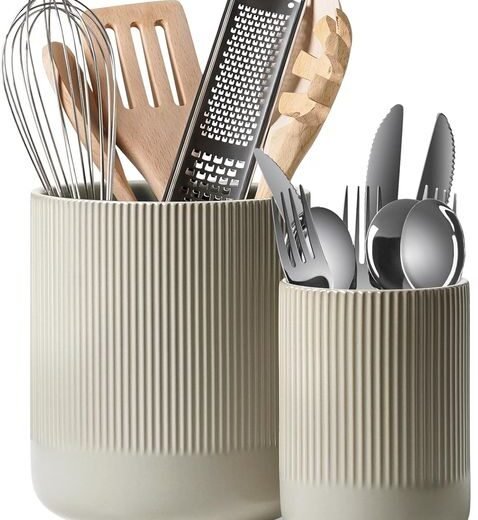
The fluted ceramic utensil holders come as two containers of different heights. They can separate appropriately sized long and short tools. Check that the handles remain visible and that the tallest tool clears any shelf or wall cabinet above the station.
For a meal, decide which utensils belong beside the food and which belong at a place setting. An upright serving-tool group can be useful, but avoid filling it with kitchen tools that will never be used at the table. Keep clean tools organized according to your routine and use suitable storage for anything that needs protection between gatherings.
Use detachable baskets for movable groups
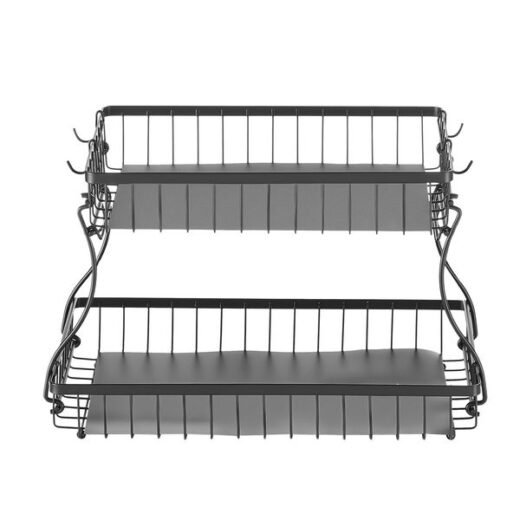
A two-tier detachable countertop basket with hanging hooks can be used stacked or as separate baskets. A separated basket can give one group its own location without bringing the entire stand to the table. Check the space around side hooks and the height required by the contents when stacked.
Group packaged or otherwise appropriately stored supplies rather than assuming the basket is designed for direct food contact. The items’ own storage requirements still apply. If a basket stays on the table, make sure its footprint leaves space for the actual meal rather than treating it as the center of the arrangement.
Rehearse one complete setup
Gather the supplies for a regular meal and place them in the proposed station. Carry out the serving sequence, then return the group to storage. Notice whether one item is fetched repeatedly from elsewhere or whether the organizer brings along supplies nobody needs.
Reduce the group until it has a clear job. A station for four everyday diners may be different from the temporary setup used for guests. Keep the occasional extras in a distinct reserve so they do not gradually take over the daily tray.
Make cleanup part of the layout
Leave a surface where used serving tools can be placed without mixing them back into the clean supply. Once the meal is finished, return only clean, appropriate items to the station. Follow the care instructions for each organizer and wipe the surface below it.
The coffee and tea station guide helps if the serving group shares a drinks counter. Compare kitchen storage according to the size of the working group, not the maximum amount the surface could hold. Finish by assigning the reserve papers and occasional tools their own nearby location so refilling the station remains simple.
About these guides: RoomSprig uses AI-assisted writing and supplier product information to explain storage choices. Check the selected version, measurements and installation details on the individual product page.