In a small home, a drying rack often occupies space that has another job later in the day. The difficulty is not just finding somewhere to open it. Finished clothes need to leave the rack, the rack needs somewhere to go, and neither should turn into a permanent obstacle.
Build the routine backward from put-away. Decide which clothes return to drawers, which belong on hangers and which need an additional care step. Then choose drying equipment around the items you air-dry, following each garment’s care label.
Mark the full drying footprint
Measure the space with the rack fully open, including the width and length of hanging garments. A rack can fit between two furniture pieces while sleeves or trouser legs extend into the walking route. Check nearby doors and drawers as well.
Choose a level location that leaves normal access through the room. Follow the rack’s use instructions and the clothing care labels; a garment that needs to dry flat may require a different arrangement. Do not assume that every washable item should be draped over the same rod.
Separate small items from larger garments
The Foldable Two-Tier Drying Rack with Sock Clips has two tiers, 21 rods and dedicated sock clips. The clips give small items a defined place while rods provide another format for larger pieces. Its height is adjustable and it folds for storage.
Use the layout to keep the load understandable. For example, group socks together so they are easy to collect, rather than distributing them across every empty rod. Leave the arrangement suitable for the actual clothing instead of treating the listed rod count as a promise that a particular number of outfits will fit.
Compare simple folding storage with expandable space
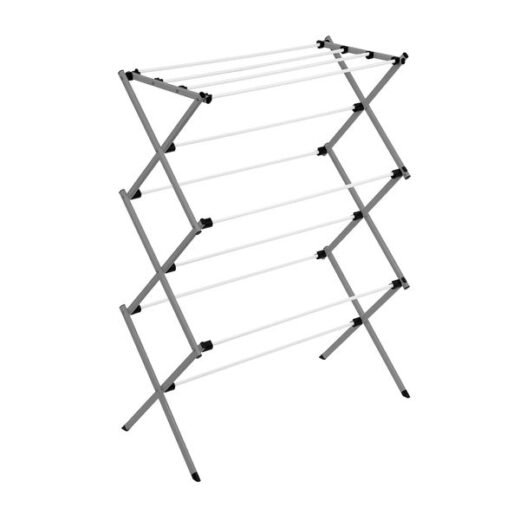
The Collapsible Steel Clothes Drying Rack is freestanding and folds to approximately three inches thick. That folded thickness is useful when checking a storage gap, but you still need to compare its other folded dimensions with the intended location.
The Extendable Clothes Drying Rack with Three Rods and Hooks provides three rods and twenty hooks in an extendable, foldable metal frame. Measure the fully opened arrangement with your larger textiles in mind. Extra width is helpful only if the room can accommodate it during use.
For a broader comparison of temporary drying footprints, see our drying rack space-planning guide. Choose for the garments and available area, rather than the largest stated feature count.
Create a short handoff for finished clothing
When a garment is ready to leave the rack, give it a final destination before starting another load. A hanger can move directly to its closet rail; a folded shirt can go straight to its drawer. A temporary finished-clothing area should be small enough that its contents stay visible and manageable.
If ironing is part of your routine, separate those pieces from items that can already be put away. The pack-away ironing station guide explains how to plan that additional stage without letting an ironing pile take over the drying rack.
Use garment bags for storage, not unfinished drying
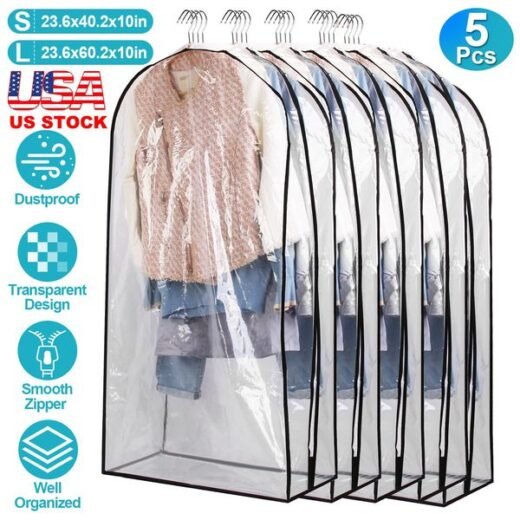
The Clear Hanging Garment Bags, 5-Pack provides zippered bags for clothing stored on hangers. Their clear PEVA format helps identify the garment inside. Check hanger-to-hem length and allow space for bulkier jackets; pictured hangers and garments are not included.
These bags belong at the storage end of the routine. Do not enclose wet laundry or assume the bags replace drying space. Prepare clothing according to its care instructions before moving suitable hanging pieces into a bag.
Close the routine by storing the equipment
Set a realistic put-away moment, such as after the final dry items come off the rack. Fold the equipment according to its instructions and return it to the measured storage location. Avoid filling that location with unrelated objects while the rack is open.
Before adding a second rack, check whether the first is occupied by clothes that are already ready to put away. Browse laundry storage for the step that is genuinely limiting the routine: drying space, a handoff surface or a place for folded equipment.
About these guides: RoomSprig uses AI-assisted writing and supplier product information to explain storage choices. Check the selected version, measurements and installation details on the individual product page.