Foldable and rolling are not opposite features: some drying racks do both. The useful comparison is how much space the rack needs while laundry is hanging, how it moves and where it goes afterward. A compact folded size says little about its working footprint.
Plan around the garments you normally air-dry and the room you actually have. A rack with several levels may suit small pieces, while an extendable format may be more convenient for different garment widths.
Measure the rack in use
Choose the intended drying location and mark its boundaries. Leave room for the rack’s opened sections and for garments extending beyond the frame. Also preserve the route past it; a rack that fits between furniture can still block the room once shirts or towels are hanging.
Read the opened dimensions and any placement instructions for the product. Check the hanging drop, not just the rod length. Decide whether the rack will stay in one position throughout drying or must move as other activities use the space.
Match tiers and hanging points to the load
The Foldable Two-Tier Drying Rack with Sock Clips has 21 drying rods, adjustable height and dedicated sock clips. Its two-tier arrangement offers separate hanging levels. Consider which garments go on each level and whether their length leaves usable room beneath them.
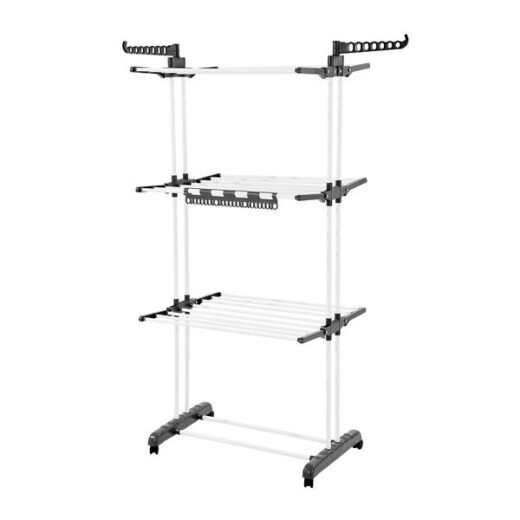
The Four-Tier Rolling Drying Rack has 24 rods and two rotating side wings. More levels create more possible positions, but they do not guarantee a particular number of garments. Your clothing dimensions and care-label requirements determine the useful arrangement.
For example, compare a usual group of shirts and socks with a separate group of long towels. The same rack can provide different usable hanging positions for those two collections, even though its rod count is unchanged.
Check what rolling would involve
The four-tier rack has four casters, including two with locks. Before selecting a rolling format, trace the route through doors and around furniture. A frame that passes while empty may need more space when clothing hangs from its sides.
Follow the product’s instructions for moving and loading. Do not assume that wheels mean any filled rack can be pushed across thresholds or uneven surfaces. If the drying location is fixed, a rolling base may matter mainly when returning the empty unit to storage.
Choose a folding format for the storage position
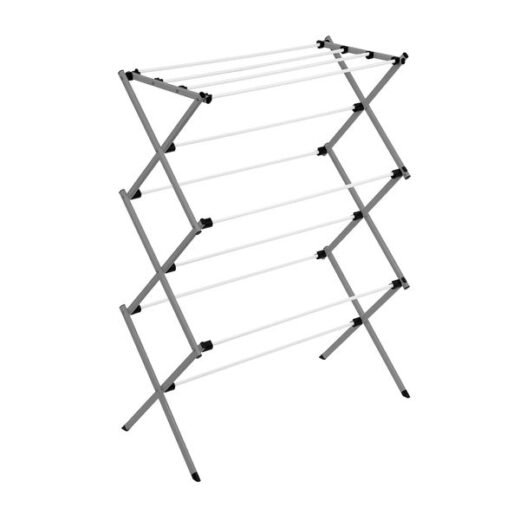
The Collapsible Steel Clothes Drying Rack folds to approximately 3 inches thick, according to its description. Measure the cupboard, wall gap or other permitted place where you intend to keep it. Include access for lifting it out, rather than choosing a storage spot that requires moving several other objects.
Check how the frame folds and which parts need to be cleared first. Folding is useful when it fits a complete routine: open in the chosen location, dry appropriate garments, put clothes away, then return the empty rack to its home. Otherwise, a foldable rack can become permanent furniture too.
Consider an extendable design for changing widths
The Extendable Clothes Drying Rack with Three Rods and Hooks provides three rods, twenty hooks and a foldable frame. The extendable format requires checking its fully opened area as well as the garment widths. Choose positions using the rack and clothing instructions, not a universal drying-time promise.
Make a simple placement plan for the usual mix: longer garments in positions with adequate drop, suitable smaller pieces on the available hooks or clips, and the rest on appropriate rods. If the plan only works when every piece overlaps, reconsider the working area or divide the drying routine.
Our drying and put-away guide connects the rack to final clothing storage. If equipment needs to move between rooms, compare laundry movement routes. Explore Laundry Storage with both the open footprint and empty storage position measured.
About these guides: RoomSprig uses AI-assisted writing and supplier product information to explain storage choices. Check the selected version, measurements and installation details on the individual product page.