A bathroom gap can look made for a slim cabinet until you try to open a drawer or pull the unit forward. The useful measurement is the space the cabinet needs in everyday use, including handles, wheels and your hand reaching inside. Start with that working area before comparing the number of shelves.
This guide helps you choose among a narrow tower, a pull-out cabinet and rolling storage. Each solves a slightly different problem, even when the product photographs look similar.
Measure the gap in more than one place
Measure between the fixtures near the floor, halfway up and at the height of the proposed cabinet. A baseboard, angled toilet base or projecting pipe can make the lowest section narrower than the space above it. Write down the smallest usable measurement and the location of the obstruction.
Then measure front to back. A cabinet can fit between two fixtures while extending awkwardly into the room. Mark the proposed footprint on the floor with removable paper or tape appropriate for the surface. Walk past it and check the bathroom door before deciding that the gap is genuinely useful.
Check which dimension faces the gap
Product names such as “5-inch slim” describe a narrow dimension, but they do not tell you how the whole cabinet sits. The 5-Inch Slim Rolling Bathroom Cabinet, for example, is listed at 19.75 inches wide, 5 inches deep and 26.5 inches high. Its long face and its narrow side are different planning choices. Sketch the intended orientation instead of relying on the headline measurement.
The Slim Pull-Out Bathroom Cabinet with Drawers is listed at 6.75 inches wide and 19 inches deep. Compare those dimensions with the actual placement, then leave working room for its drawers and slide-out sections.
Choose access before capacity
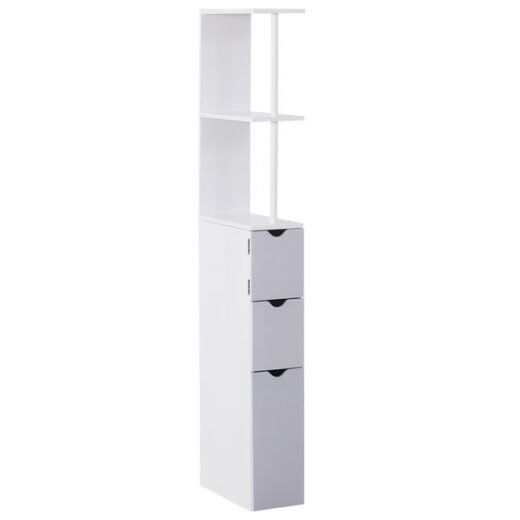
A drawer is convenient for small loose items because you can open a single section. It also needs an unobstructed path in front. The 6-Inch-Wide Bathroom Storage Tower combines three drawers with two open shelf spaces. It suits a plan in which some supplies are reached directly and others are contained, provided the drawer openings remain usable.
Sliding doors change that access pattern. The Slim Rolling Toilet Paper Cabinet has sliding lower doors, an adjustable shelf and a lift-up top. Check both the side approach to the lower storage and the space above the top. A unit beneath another shelf may fit on the floor but lose one of its useful openings.
Plan the movement of a rolling cabinet
Wheels help reposition a cabinet; they do not make every bathroom gap a usable parking place. Trace where the cabinet would move when you want supplies from its far side. Look for thresholds, rugs, bath mats and fittings that interrupt the route. Avoid choosing a layout that requires moving several other objects first.
Read the instructions for caster use and loading. The toilet-paper cabinet has four casters, including two with brakes, but that feature should still be used within its instructions. Check assembly and any required securing directions for whichever storage format you choose.
Give the narrow space a limited job
Decide what the cabinet will hold before filling every compartment. A daily group might contain spare washcloths and a few frequently used toiletries; another cabinet may be intended mainly for replacement paper rolls. Compare your actual packages with shelf and drawer openings, especially unusually large rolls or tall bottles.
For a wider organizing plan, use our bathroom counter reset to define the daily group, then give backup supplies a separate home. Browse Bathroom Storage once you have the footprint, access direction and contents written down.
About these guides: RoomSprig uses AI-assisted writing and supplier product information to explain storage choices. Check the selected version, measurements and installation details on the individual product page.