
A desk used for work and study changes roles during the day. The challenge is not just storing more supplies; it is making the change between activities clear. Create a home for each active group and protect the surface both activities need. A short return-and-retrieve routine can prevent yesterday’s work papers from becoming the base layer of tonight’s study pile.
List what changes between activities
Write down the materials used for each activity: documents, notebooks, devices and small supplies. Mark what is shared and what belongs only to one role. Keep confidential or otherwise restricted papers in storage suited to your requirements rather than leaving them in an open mixed group.
Lay out each activity separately on the cleared desk. Measure the working area needed to open a notebook or spread a document without moving a permanent organizer. If an accessory occupies that area, decide whether it needs to stay on the surface at all.
Give active papers separate homes
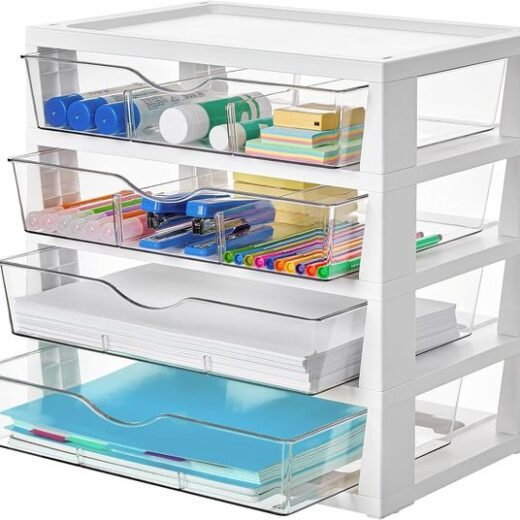
The clear four-tier desk organizer with drawers provides separate paper levels and drawers for loose supplies. Check tier openings with the actual folders and sheets, including projecting tabs. Leave space for the drawers to open without entering the main working area.
Assign levels by current task rather than labeling one large pile “work” and another “study.” A clear active-project group is easier to revisit than several unrelated documents gathered by location. Keep a note of the next step if that helps you restart the task later.
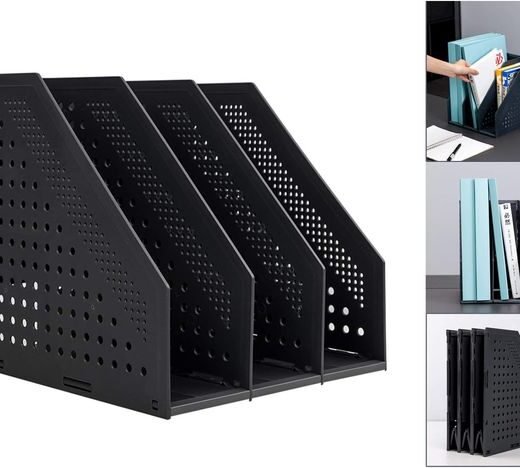
The three-compartment magazine file organizer offers an upright format for appropriately sized documents and notebooks. Check height, depth and the compartment opening before assigning a thick folder. Put labels where they can be read from the normal seat or approach to the desk.
Move occasional supplies away from the work surface
A five-drawer rolling office storage cabinet can contain larger stationery and reserve groups. Measure its parked footprint and drawer travel, and include chair movement if it sits near the desk. Follow the supplied caster-locking and loading instructions, keeping heavier items low as directed in the catalog.
Use drawers for clearly named groups rather than relocating the desktop pile into an equally mixed cabinet. Keep shared daily supplies in the most convenient appropriate location. Occasional equipment can stay farther from the working surface if it remains easy to identify and retrieve.
Keep device routes stable through the switch
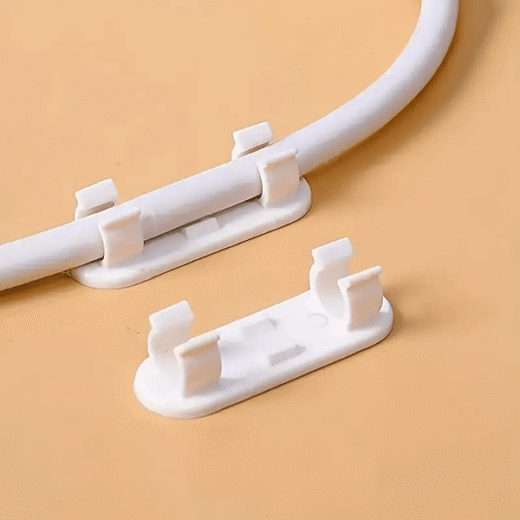
The clear adhesive cable clips define holding points on suitable surfaces. Check cable fit and the mounting instructions before attachment. Allow the movement and connection access required by the equipment; a laptop put away after work needs a different route from a device that stays in place.
Follow device instructions when unplugging or repositioning connections. The desk cable organization guide helps map the route before adding clips. Do not make the role change depend on pulling a cable through unrelated stored supplies.
Define a brief reset sequence
Choose a sequence you can repeat: identify what is still active, return that group to its assigned home, put away the activity-specific tools and clear the shared working area. Then retrieve only the next activity’s materials. Include a suitable temporary place for a task that is genuinely still underway.
The guide to incoming, active and archive papers provides more structure if documents dominate the desk. Compare office organization around those groups rather than adding compartments without rules.
Try the reset twice during a normal day. Notice any object that has no clear destination or any group you must unpack to reach the next task. Adjust that specific home. The shared desk works when both roles can begin with a clear surface and neither leaves an unexplained pile for the other.
About these guides: RoomSprig uses AI-assisted writing and supplier product information to explain storage choices. Check the selected version, measurements and installation details on the individual product page.